

From Ballots to Bullets: Political Firestorm Engulfs Somalia Ahead of 2026 Elections
|
24 August 2025 23:15
 0
0 - Visits: 3755
-

- Share
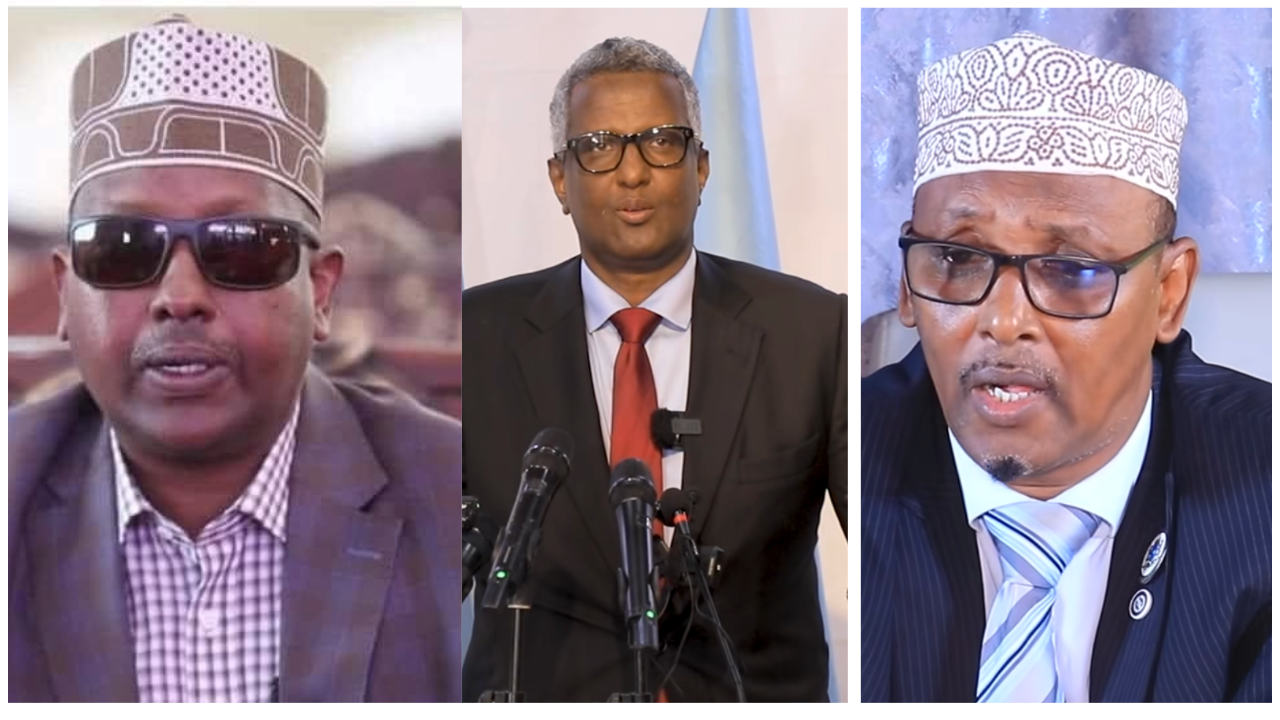

MOGADISHU, Somalia (HORN OBSERVER) - Mogadishu has once again slipped into the theater of confrontation. In the past week, Somalia's capital has been consumed by escalating rhetoric, mutual threats, and a looming sense of violence as the country edges closer to its pivotal May 2026 elections.
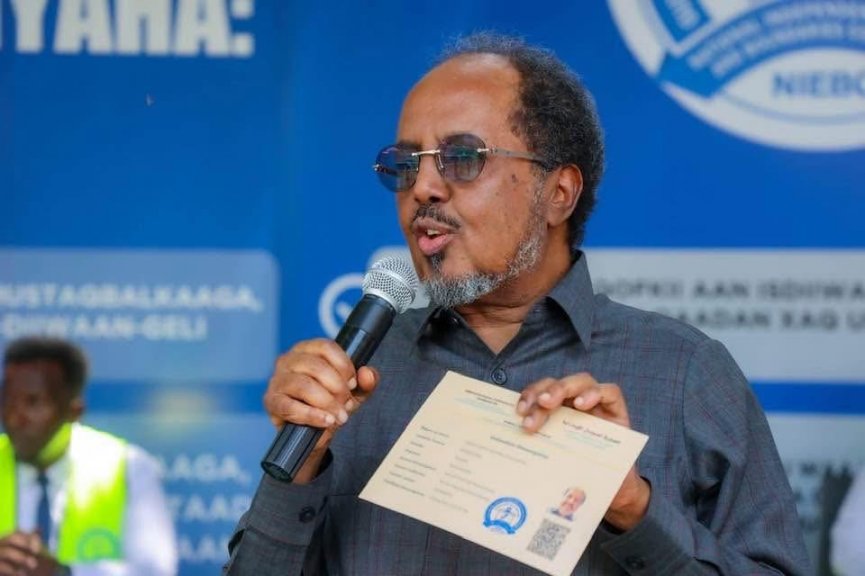
At the heart of the turmoil stands President Hassan Sheikh Mohamud, accused by opposition leaders of engineering a power grab disguised as reform. His proposed transition to a controversial "one person, one vote” system—hailed by his allies as democratic progress—is denounced by critics as a manipulated framework designed to consolidate authority in Villa Somalia.
The opposition camp is formidable: last week three former presidents, a host of former prime ministers, and sitting members of parliament. They argue that Mohamud’s plan has no constitutional grounding and risks dismantling Somalia’s fragile federal balance.
Accusations of corruption, land seizures, and the forced eviction of vulnerable communities in Mogadishu have only sharpened mistrust.
As political tempers flared, rhetoric hardened into outright threats. Defense Minister Ahmed Moalim Fiqi, speaking at a press conference in Mogadishu’s Jazeera Hotel, delivered a chilling warning to opponents considering armed resistance.
"Nobody can take up a gun,” he declared. "If they do so we will deal with them until they cry like Jews. They will scream, ‘are you Jews?’”
The remark provoked immediate outrage. Opposition MP Abdirahman Abdishakur questioned how a free and fair election could be held under leaders who weaponize anti-Semitic slurs against their rivals. His colleague, Dahir Amin Jeesow, dismissed Fiqi’s threats and challenged him openly: "Let him try, if he is man enough.”
PHOTO: At the heart of the turmoil stands Hassan Sheikh Mohamud, accused by opposition leaders of engineering a power grab disguised as reform.
A Disturbing Pattern
Fiqi’s statement did not emerge in isolation. It followed the precedent set by Prime Minister Hamza Abdi Barre, whose rhetoric had already dragged Somalia’s politics deeper into extremist terrain.
In November 2023, just weeks after the eruption of the Gaza war, Barre addressed a religious gathering in Mogadishu attended by prominent extremist figures. From the pulpit, he invoked a Qur’anic interpretation claiming that Jews had been transformed into "pigs and monkeys,” before declaring Hamas a "liberation movement” worthy of Somali support.
The speech drew applause in some circles but alarmed Somalia’s international partners. More importantly, it marked the creeping normalization of extremist ideology at the highest levels of government.
Barre’s words, simultaneously demonizing Jews and elevating Hamas, blurred the already fragile boundary between governance and radicalism.
Concerns about extremist infiltration in Somali politics stretch back decades. Both Barre and Fiqi have long, uneasy associations with Islamist networks.
Hamza Abdi Barre, educated in Yemen, is widely believed to have cultivated ties with Islamist movements, including affiliates of the Muslim Brotherhood, the same transnational organization to which Hamas belongs.
His ascent to prime minister is viewed by critics as the culmination of political Islam’s gradual accommodation in Somalia’s federal institutions.
Ahmed Moalim Fiqi, a Sudan-educated former member of Al-Itihaad al-Islami, later joined the Islamic Courts Union, which gave birth to Al-Shabaab, al-Qaeda’s affiliate in Somalia. As director of the National Intelligence and Security Agency (NISA), Fiqi was repeatedly accused of protecting Al-Shabaab operatives tied to his clan.
In 2023, he was alleged to have granted cash and protection to Nur Deeq, a notorious Al-Shabaab commander captured in Mudug.
Puntland authorities later published a list of Nur Deeq’s victims, demanding justice. Yet no trial has been held, and Nur Deeq remains effectively shielded from accountability.
Such stories reinforce the perception that Somali politics continues to operate in the shadow of Islamist currents, where state authority and radical affiliations remain perilously entangled.
Extremism, Wealth, and Impunity
The spread of extremist ideology in Somalia is not fueled by religion alone. It thrives at the intersection of poverty, political exclusion, and entrenched impunity. With chronic unemployment and systemic corruption leaving vast segments of the population disillusioned, extremist groups have capitalized on despair to recruit followers.
At the same time, networks rooted in earlier Islamist movements—such as Al-Itihaad al-Islami and affiliates of the Muslim Brotherhood—have penetrated Somalia’s political and economic life. By embedding themselves in business, bureaucracy, and local governance, they have created a self-sustaining cycle where wealth and ideology reinforce one another.
International actors, despite recognizing the risks, have often chosen expediency over accountability. Western governments continue to embrace Somali leaders with known extremist ties in the name of counterterrorism and stability. The result is a culture of impunity, where incendiary rhetoric and radical affiliations are not only tolerated but legitimized by global partnerships.
As Somalia heads toward the May 2026 elections, the stakes are existential. President Mohamud frames his reforms as a democratic leap forward, but the opposition sees them as an authoritarian maneuver that could destabilize an already fragile state.
Meanwhile, the casual use of extremist rhetoric—from Barre’s glorification of Hamas to Fiqi’s anti-Semitic threats—has pushed Somali politics into dangerous territory. It reveals not only the ideological undercurrents within government but also the enduring inability to separate statecraft from radicalism.
Unless Somalia finds a way to restore consensus politics, protect its institutions, and confront extremist influence within its own leadership, the 2026 elections risk becoming less a democratic milestone than a flashpoint for violence and radical resurgence.

- Popular
- Rated
- Commented


04/11/2021 - 11:05:02

28/05/2024 - 15:44:10


18/08/2025 - 17:22:07

01/03/2021 - 09:00:37



Opinions
09/05/2026 - 10:04:34
Politics
Terror Watch
06/04/2026 - 17:26:14
03/04/2026 - 20:41:52
26/03/2026 - 22:48:30
Press Releases
04/06/2026 - 20:43:42
04/06/2026 - 20:37:07
31/05/2026 - 12:50:08


From Ballots to Bullets: Political Firestorm Engulfs Somalia Ahead of 2026 Elections
MOGADISHU, Somalia (HORN OBSERVER) - Mogadishu has once again slipped into the theater of confrontation. In the past week, Somalia's capital has been consumed by escalating rhetoric, mutual threats, and a looming sense of violence as the country