

Wake Up for Rights: Mogadishu Ignites Baraarug Campaign on Human Rights
|
22 December 2024 17:02
 0
0 - Visits: 1724
-

- Share
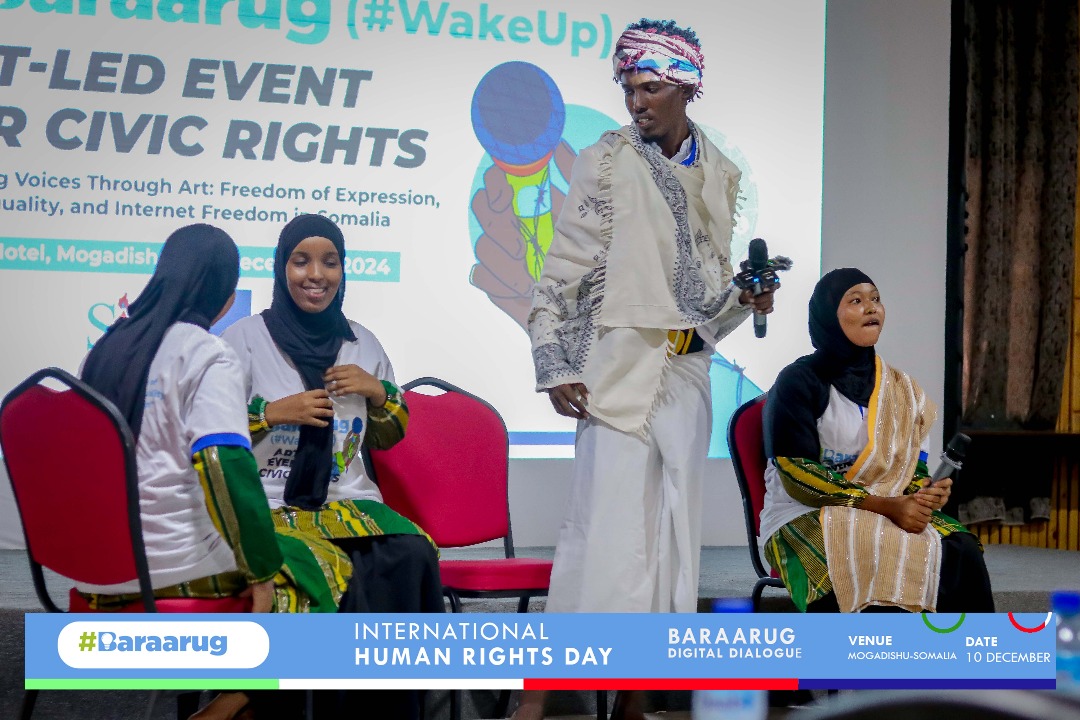

MOGADISHU, Somalia (HORN OBSERVER) - On December 10, 2024, Mogadishu became the epicenter of human rights advocacy as activists, government officials, and community leaders gathered to commemorate International Human Rights Day. The event was marked by passionate speeches, artistic performances, and the launch of the transformative #Baraarug (#WakeUp) Campaign.
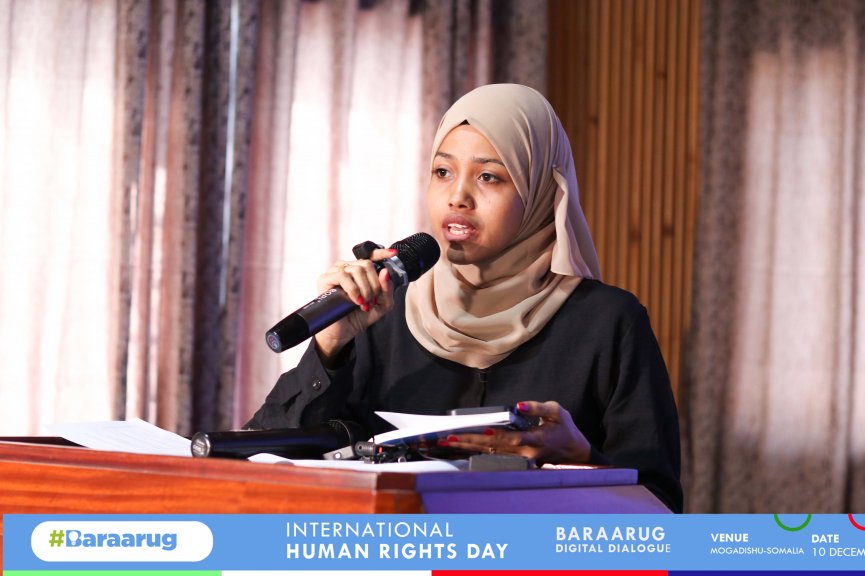
The ceremony opened with a stirring poem by a young Somali woman poet, Fartun Ahmed Mohamed. Her verses resonated deeply:
"A world where dignity prevails, and honor is upheld,
A world where truth is spoken freely, without silencing voices,
A world where leaders are chosen for their merits, without division,
A world where women sit at decision-making tables, shaping futures.”
Fartun’s words captured the aspirations of many in the audience, including Mohamud Muse, a clan elder from the Yibir community, one of Somalia's most marginalized groups.
Moved to tears, elder Mohamud addressed the gathering after Fartun's performance.
PHOTO: The ceremony opened with a stirring poem by a young Somali woman poet, Fartun Ahmed Mohamed.
"I want to blame the media and religious groups for not doing enough to raise awareness of our plight,” Mohamud said, his voice trembling. "Entire communities have their rights ignored and rejected. This denial is a deep wound. But I urge the media to do more. Forgive me if I scold you—it comes from a place of pain and hope.”
The Yibir are skilled artisans who craft essential items for Somali communities, relying on their trade rather than nomadic livelihoods. Despite their contributions, they face systemic rejection, with other clans forbidding intermarriage and denying them rights. This marginalization has led to violence and the loss of their land.
The highlight of the event was the launch of the #Baraarug Campaign, an initiative led by the Somali Journalists Syndicate (SJS) to address human rights challenges and promote inclusivity. The campaign aims to amplify marginalized voices, combat systemic discrimination, and foster civic engagement.
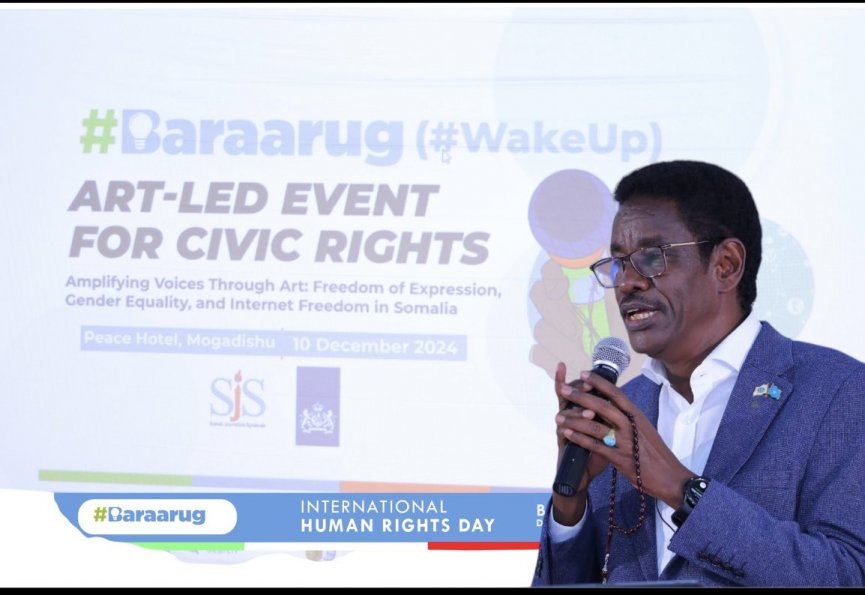
General Abdullahi Sheikh Ismail (Fartaag), Somalia’s Minister of Internal Security, lauded the initiative.
"Human rights are deeply rooted in our Somali culture and Islamic principles. Even in times of clan conflict, we protected vulnerable groups under the ethos of Barimageydo—‘spared from the spear.’ This campaign is a wake-up call to uphold those values and address abuses against women, journalists, and minorities.”
PHOTO: General Abdullahi Sheikh Ismail (Fartaag), Somalia’s Minister of Internal Security, lauded the initiative.
Addressing Systemic Challenges
Key speakers shed light on Somalia’s human rights landscape. Diini Mohamed Diini, former Chairperson of Somali Non-State Actors, criticized the delay in establishing constitutional safeguards, such as the Independent Judicial Service Commission, the National Human Rights Commission and the Constitutional Court.
"Since 2012, essential institutions meant to protect citizens’ rights have been obstructed. Without these mechanisms, violations go unchecked,” he emphasized.
Women and youth, who constitute the majority of Somalia’s population, remain disproportionately affected by harmful cultural practices and systemic neglect. Duniya Mohamed Ali, Chairwoman of the Somali Women Education Centre, spoke about the cultural prejudices holding women back.
"In the Maay language spoken in the Juba area, there’s a saying that a 50-year-old woman should be treated like a donkey to ensure obedience. Such beliefs degrade women and hinder their political representation. We must challenge these traditions through education and empowerment,” Duniya said.
Abdalle Ahmed Mumin, Secretary General of SJS, told this reporter that the #Baraarug Campaign is a collaborative effort with Somali civil society groups.
"Defending human rights is not optional; it is essential for progress. Every Somali deserves dignity, equality, and freedom. Through this campaign, we aim to amplify marginalized voices and ensure justice becomes the foundation of Somalia’s future,” he stated.
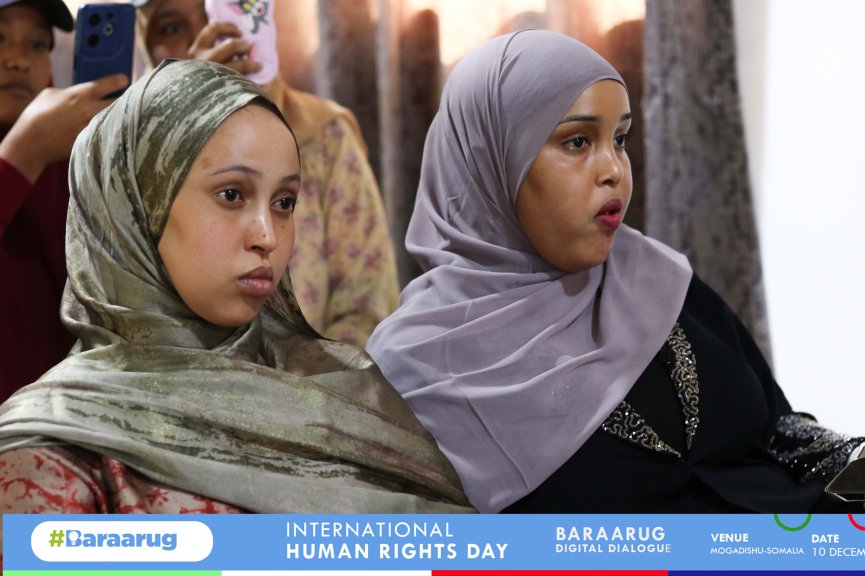
PHOTO: Women and youth, who constitute the majority of Somalia’s population, remain disproportionately affected by harmful cultural practices.
Aligned with the Dutch Human Rights Policy, the campaign focuses on civic awareness, freedom of expression, and gender equality. It leverages digital platforms and artistic expression to educate youth and women about their civic rights and mobilize international solidarity.
The #Baraarug Campaign urges Somali society to stand up for justice and equality. It seeks to hold leaders accountable, address rights violations, and empower vulnerable groups. As Somalia navigates its complex challenges, the campaign envisions a future grounded in stability, peace, and inclusion—a Somalia where every voice matters.

- Popular
- Rated
- Commented


04/11/2021 - 11:05:02

28/05/2024 - 15:44:10


18/08/2025 - 17:22:07

01/03/2021 - 09:00:37



Opinions
16/09/2026 - 16:11:57
15/09/2026 - 16:56:43
Politics
06/10/2026 - 18:48:48
06/10/2026 - 15:14:30
02/10/2026 - 17:35:54
Terror Watch
06/10/2026 - 21:41:19
06/10/2026 - 21:03:29
29/09/2026 - 14:38:38
Press Releases
05/10/2026 - 19:10:20
30/09/2026 - 22:54:31


Wake Up for Rights: Mogadishu Ignites Baraarug Campaign on Human Rights
MOGADISHU, Somalia (HORN OBSERVER) - On December 10, 2024, Mogadishu became the epicenter of human rights advocacy as activists, government officials, and community leaders gathered to commemorate International Human Rights Day. The event was marked