

Op-ED: Precedent Hassan's political strategy and reoccurring Somali political crises
 0
0 - Visits: 14089
-

- Share
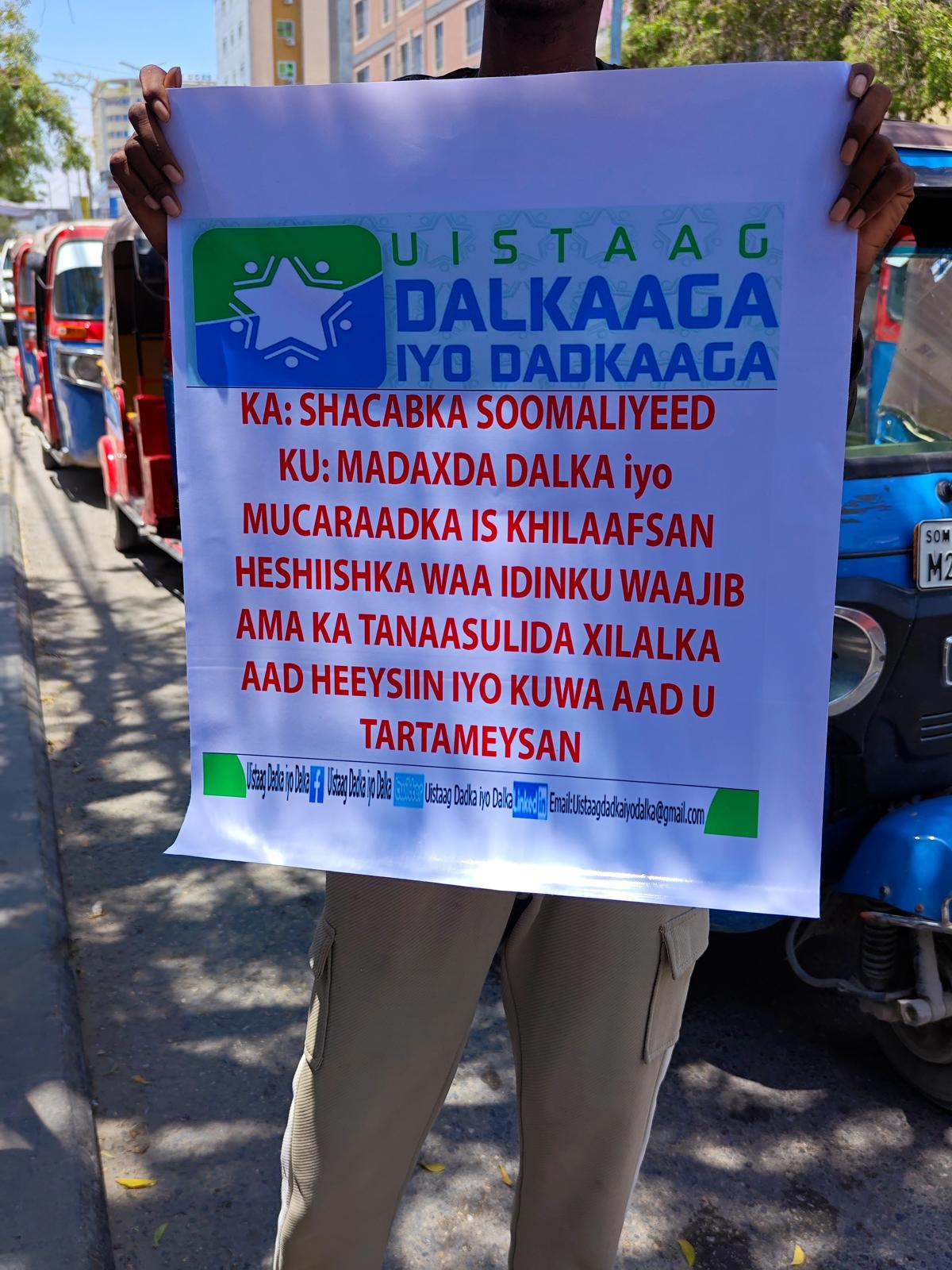

Five years later, the man who helped defend it has become its most consequential threat.
In March 2026, Somalia's parliament approved, and President Hassan Sheikh signed, constitutional amendments extending both parliamentary and presidential terms from four to five years, pushing elections back to 2027. What makes this particularly striking is that as recently as September 2025, Hassan Sheikh was publicly and repeatedly denying any such intention. In an interview with the BBC Somali Service, he stated flatly that no politician had veto power over the electoral timetable and that only the independent electoral commission could request a delay. There was no formal address to the nation explaining the extension, no press conference walking Somalis through the implications.
The government's position, assembled quietly after the fact, was that the new constitution superseded the old four-year timeline, that parliament's passage of the amendments constituted sufficient endorsement, and that the additional year was necessary to prepare for credible one-person, one-vote elections. The opposition coalition, the Somali Future Council, was not persuaded. They called it a constitutional coup. By the time Hassan Sheikh's four-year constitutional term formally expired on 15 May, there was no transition plan in place and no election on the horizon. The extension had simply happened, by institutional silence and legal sleight of hand.
Procedural Cover
Where Farmaajo used a blunt parliamentary resolution of debatable legality, Hassan Sheikh has been more methodical. He re-established the Independent Constitutional Review and Implementation Commission and cast his agenda as responsible stewardship of a constitutional review process that had dragged on for fourteen years. The result, though, was the same: 222 lawmakers from the Lower House and the Senate, out of a total of 329, voted by acclamation to extend their own mandates alongside the president's. Whether you arrive at power extension through a blunt instrument or procedural cover, the outcome for Somali democracy is identical. An incumbent uses institutional levers to deny citizens the right to choose their leaders.
The hypocrisy stings more when one recalls the slogan Hassan Sheikh rode to the presidency in 2022: Somalia at Peace with Itself and the World. The vision was genuinely ambitious. Diplomatic normalisation with Ethiopia, rapprochement with regional neighbours, an end to the internecine feuding that had defined Somali politics for a generation. On the external front there was real progress. But peace with itself requires something the president appears unwilling to offer: a level political field.
Deadly Clashes
That the crisis is not merely political became horrifyingly clear on the nights of June 3 and 4. Fighting between government forces and opposition-aligned militia erupted across mainly three Mogadishu districts- Kaaraan, Abdiaziz and Howlwadaag in the most serious street violence the capital has seen in years. According to UNHCR, 13 people were killed and 12,500 displaced, families forced from their homes as gunfire swept through residential neighbourhoods. The Federal Government has sharply disputed those figures, putting the death toll at one and making no mention of displacement. The gap between those two accounts is not a minor statistical disagreement. It points to a government unwilling to reckon publicly with the human cost of a political crisis.Though tensions are in resolving process Somali governance system fragility is at higher risk unless re-build and build more grounded and sustainable governance system
The signs of where this was heading were there early. When the opposition boycotted the Banadir Regional Administration elections, citing procedural irregularities, Hassan Sheikh did not pause to address their grievances. He moved quickly to fill the resulting vacuum with candidates from his party- JSP, turning a contested process into an uncontested consolidation. Southwest State has since followed the same script.
FMS Influence
On 15 April, in a closed-door late-night meeting at the presidential palace, the president personally anointed Federal Parliament Speaker Adan Mohamed NurMadobe as the ruling party's sole Southwest State presidential candidate. There was no internal party contest, no pretence of democratic process even within his own organisation. Hussein Sheikh Mohamud, previously considered a strong candidate, quietly withdrew after a public appearance alongside the president and Madobe. Other influential party figures were persuaded, through means unspecified, not to run. The field was cleared by a handshake, not a ballot.
Madobe's candidacy is no coincidence. As speaker, he was central to steering the president's controversial constitutional amendments through parliament, measures that critics argue fell short of the required majority. His reward is the presidency of a federal member state whose own autonomy Mogadishu had just overridden by force, reportedly with Turkish air support, in an operation officials framed as restoring democratic order. That the same federal government then positioned its preferred candidate to lead the state it had just subdued needs no editorial commentary.
It also exposes a central contradiction in the president's democratic reform agenda. Hassan Sheikh's championing of one-person, one-vote is, in principle, correct and long overdue. Somalia's clan-delegate electoral system has been manipulated by every administration that has operated under it. But the president appears to be building the organs of a new electoral system that his party will dominate before any vote is cast, packing regional administrations with loyalists while presenting the exercise to the international community as democratic progress. Banadir, Southwest State, and the federal parliament itself now reflect not a Somalia moving toward democratic pluralism but one in which institutional space is being methodically narrowed.
International Pressure
The recurring confrontations in Mogadishu are not simply frustrating. They are a structural warning, and June 3 and 4 proved they can turn lethal with very little notice. Somalia's state-building project rests on foundations far more fragile than official confidence suggests. The army has made genuine strides toward professionalisation and unified command in recent years, though clan-based loyalties still shape recruitment and cohesion in parts of the force. Al-Shabaab holds vast rural territory and retains the capacity to strike major urban centres. Puntland and Jubbaland have already suspended recognition of federal institutions in protest at the March amendments. When the centre cannot hold its periphery without military operations and midnight political deals, the federal architecture is under serious strain.
That progress is about to be tested without its principal external backstop. On 1 July, Washington informed the African Union it would block any renewal of UN logistical support, through the UN Support Office in Somalia, for the AU force fighting alongside Somali troops once the mission’s current mandate expires in December, a decision AU official have described as irreversible. Losing the mission’s main source of fuel, rations, medical care and troop transport at the same moment the government is consumed by the succession dispute leaves the war against Al-Shabaab resting more heavily on a national army whose improvements have not yet been tested at that scale, and on bilateral partners such as Turkey, whose forces are already active on other fronts of Somalia’s political crisis.
The 2021 standoff was a near miss. Armed factions massed in Mogadishu, and the country came within a miscalculation of open civil conflict. It passed because external pressure held and Farmaajo ultimately yielded. What is unfolding now is more volatile in at least one measurable respect: people have already died, thousands have already fled their homes, and no political settlement is in sight. What is being worn away is not just a constitutional deadline but the foundational idea that elections are how power changes hands in Somalia, and that the rules governing that process apply to everyone, including those who write them.
Talks, But Not With Everyone
In early June, following the deadly clashes, international partners handed mediation duties to Turkey after their own efforts stalled. A Turkish delegation held a first round of talks with the government and opposition groups, but the process collapsed almost immediately over disagreement on how to compose joint technical committees. It reconvened in the first week of July, with the mediation team expanding to include the UK, US, EU and UNSOS alongside Turkey, meeting separately with government representatives and three distinct opposition groupings.
By mid-July, a pattern had emerged. The Federal Government reached apparent consensus with two factions, NabadiyoNolol, led by former president Farmaajo, and the Somali Unity Council, led by former prime minister Omar AbdirashidSharmarke, on the outlines of direct, multiparty elections overseen by the IndependentNational Elections and Boundaries Commission. The Somali Future Council held a different position entirely, proposing a two-tier electoral commission jointly run by the federal government and the member states. The Council brings together some of the opposition’s most prominent national figures, former president Sharif Sheikh Ahmed, AbdirahmanAbdishakur, and former prime ministers Hassan Ali Khaire and Mohamed Hussein Roble among them, joined by the presidents of Puntland and Jubaland, the two federal member states that have withdrawn recognition from Mogadishu.
That composition matters. This is not a peripheral bloc negotiating from the regions inward; it is a coalition built around some of the president’s own former peers and predecessors, reinforced by the two states most directly affected by his consolidation of power. Hassan Sheikh has found common ground fastest with factions built around individual former leaders rather than institutional weight. Turkey’s own credibility as a mediator has not helped close the gap with the Council: both Puntland and Jubaland have publicly rejected Ankara as a neutral broker, citing its deepening security and political partnership with the federal government, the same partnership that reportedly supplied air support for the operation that installed Madobe in Southwest.
Dialogue is, on its own terms, a better outcome than the silence that followed the March amendments. But an agreement reached with the factions least able to check the president’s authority is not evidence that the underlying dispute, over who controls the machinery of the next election, has been resolved. It is evidence that the president has found a route to claim consensus without settling it with the coalition best positioned to contest his hold on power.
Hassan Sheikh Mohamud argued that with force and conviction in 2021. His partners in the international community, who backed him then, owe it to Somalia to hold him to the same argument now.
By UistaagDadkaiyoDalka platform
Abdirahman Yusuf Ali – Director of UistaagDadkaiyoDalka, Social and peace activist and former adviser of Youth development at Federal Ministry of Youth and sports and Federal member states

- Popular
- Rated
- Commented


04/11/2021 - 11:05:02

28/05/2024 - 15:44:10


18/08/2025 - 17:22:07

01/03/2021 - 09:00:37



Opinions
16/09/2026 - 16:11:57
15/09/2026 - 16:56:43
Politics
06/10/2026 - 18:48:48
06/10/2026 - 15:14:30
02/10/2026 - 17:35:54
Terror Watch
06/10/2026 - 21:41:19
06/10/2026 - 21:03:29
29/09/2026 - 14:38:38
Press Releases
12/10/2026 - 13:44:28
05/10/2026 - 19:10:20


Op-ED: Precedent Hassan's political strategy and reoccurring Somali political crises
In April 2021, Hassan Sheikh Mohamud was among the most vocal opposition figures demanding that President Mohamed Abdullahi Mohamed, known as Farmaajo, respect the constitution. The Lower House had just passed a resolution extending Farmaajo's t