

Laftagareen's Forces Attack Baidoa, Reviving the Fight Somalia Thought It Had Won
 0
0 - Visits: 6632
-

- Share
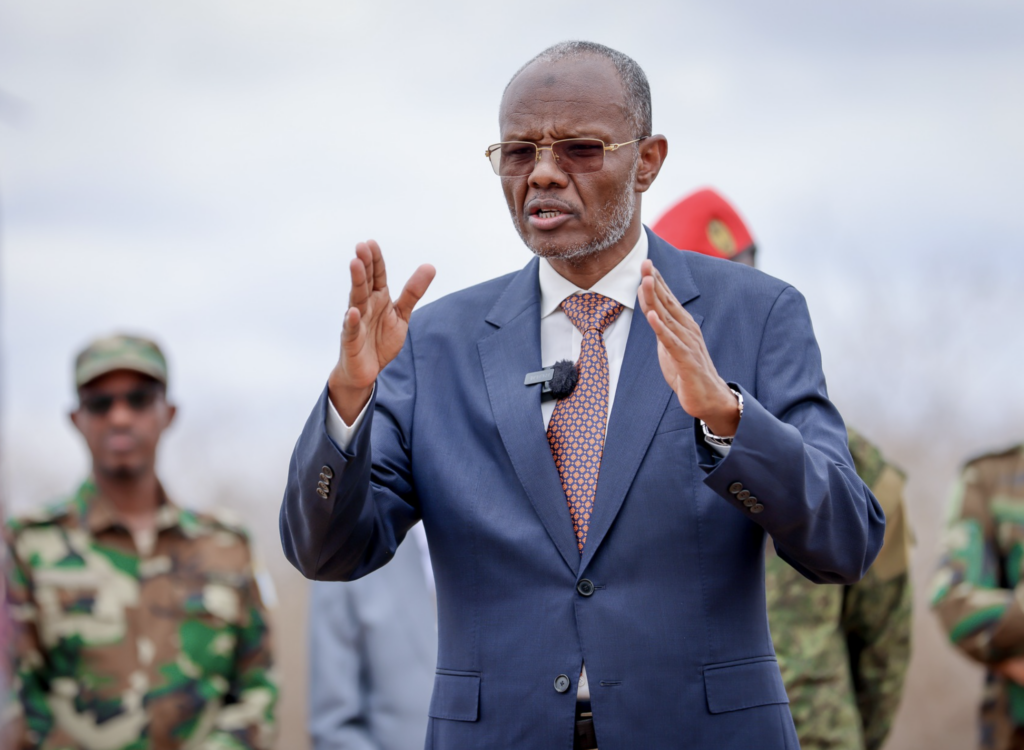

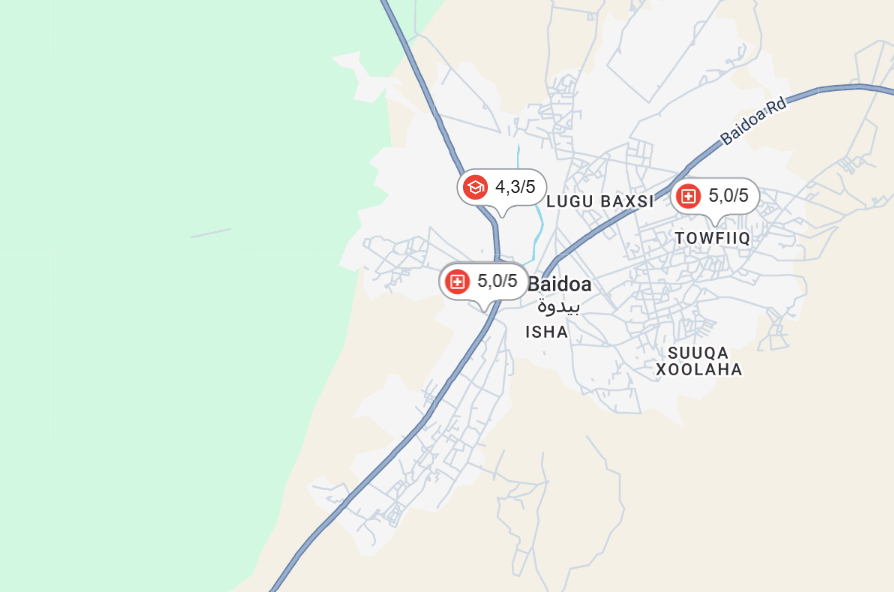
Residents reported heavy gunfire and explosions in the Towfiiq neighborhood. Fighting broke out around 5 a.m. Somalia's Ministry of Defense said the assault involved vehicles packed with explosives. It described the attacking force as a mix of Al-Shabaab militants and militias loyal to Laftagareen — using the term "Khawaarij,” the standard Somali term for Al-Shabaab, to describe them. The ministry said its forces repelled the attack and killed at least 30 of the assailants.
Laftagareen's side told a different story. His spokesperson, Hassan Mohamed, said in a statement that Laftagareen's forces had captured Baidoa's city center. He called on federal troops to surrender. That claim could not be independently verified. Later reporting suggested the army ultimately drove the attackers back out after hours of fighting. Some vehicles belonging to the attacking force were reportedly seized by government troops before the fighters withdrew.
Monday's attack was not the first. It likely won't be the last.
Laftagareen-aligned fighters have mounted a running campaign against Baidoa ever since federal forces took the city in March. Clashes in the villages surrounding Baidoa in late May left two officers of the Turkish-trained Gorgor forces dead. Fighters loyal to Laftagareen briefly entered the city before withdrawing to the rural periphery. Somali Guardian described a "series of attacks” by Laftagareen's forces through the summer, with his fighters and Al-Shabaab positioned in different directions around the town.
A central figure in that campaign is Mahad Abdirahman, widely known by his nickname "Taliye Shub.” He is Laftagareen's father-in-law and close personal ally, and the former commander of Somalia's Custodial Corps, the country's prison security service. He was placed under federal house arrest in Mogadishu as part of the same operation that removed Laftagareen from power in late March. Former President Mohamed Abdullahi Farmaajo publicly denounced that detention as political revenge.
Since leaving custody, Taliye Shub has issued public threats against South West's current leadership. According to sources, he still commands loyalty among elements of the security forces themselves. He now also sits as a member of parliament, having secured his seat with Laftagareen's backing — giving him a formal political platform alongside whatever influence he retains inside the security services.
New fighters were reported reinforcing Laftagareen's positions in the Bay region as recently as August 11. Monday's assault was the culmination of that buildup, not a bolt from nowhere.
A fight Mogadishu thought was over
Federal troops seized Baidoa in March 2026. Laftagareen had defied constitutional changes pushed by President Hassan Sheikh Mohamud and had himself re-elected in a rushed, single-day vote. The Somali National Army took the city within 48 hours. Laftagareen resigned and fled to Nairobi. Ten weeks later, Adan Madobe was elected president of South West State in the same city, with the federal government's full backing and no comparable pushback.
Mogadishu had hoped to treat that as settled. Monday's attack — by far the most serious escalation since March — is a reminder that Laftagareen never accepted it. He has continued to insist from exile that he remains the legitimate president of South West State. He has spoken openly about plans to "liberate” the region he says is now under federal occupation. Five months of smaller clashes were a warning sign. Monday was the clearest proof yet that those were not just words.
What's at stake
Baidoa is not a minor city. It is home to more than a million people. It hosts international peacekeepers and humanitarian agencies. It shelters hundreds of thousands of people displaced by conflict and drought — families for whom renewed fighting is not a political abstraction but a direct new danger. Roughly one in four children at the city's displacement sites is already malnourished, according to aid organizations working in the area.
A collaboration that would explain a great deal — if it's real
The government's claim that Laftagareen's forces fought alongside Al-Shabaab is not just Somali state messaging. Al Jazeera, reporting independently, confirmed that Somalia's Defence Ministry "accused Laftagareen's forces of fighting alongside the al-Qaeda-linked armed group al-Shabab.” But the claim is far from settled. Hiiraan Online, reporting on the same attack, noted plainly that the army "did not provide evidence identifying the attackers as Al-Shabaab or explain the apparent presence of forces loyal to Laftagareen reported in the city.” In earlier clashes around Baidoa this year, analysts described Laftagareen's fighters and Al-Shabaab as two separate, parallel threats surrounding the city rather than allies.
"Khawaarij” is Somalia's standard term for Al-Shabaab specifically. It is used across the political spectrum, including by opposition figures in their own joint statements. The government does not apply it to just any armed opponent. It is reserved for forces the government specifically suspects of Al-Shabaab affiliation or collaboration. That the label was used here is itself a signal of what officials believe, or at least suspect, about who Monday's attackers actually were — even if, as Hiiraan noted, they haven't yet shown their work.
The government's case rests on more than the label. It is not the only source pointing toward collaboration. Sources familiar with the fighting, speaking independently of any government statement, cited two specific reasons for suspecting cooperation. The first is the tactic used Monday morning: vehicle-borne explosives are a signature Al-Shabaab method, not one typically associated with a political opposition force built around a former state president. The second is the geography. Laftagareen's fighters have spent recent weeks massing in villages 40 to 60 kilometers outside Baidoa — territory Al-Shabaab controls and treats as its own, hostile to any other armed group operating there without an understanding.
Somalia's Defence Ministry, separately, has pointed to a piece of physical evidence. Officials say one of the armored vehicles recaptured from Monday's attacking convoy was originally seized by Al-Shabaab from the Somali army back in 2023. If that vehicle's history is accurate, its presence in Laftagareen's convoy would be direct evidence of a weapons or equipment pipeline between the two forces — not just shared tactics or shared territory, but shared hardware.
Two separate accounts have arrived at the same conclusion by different routes. One comes from sources with no stake in the government's messaging. One comes from the government itself. That convergence makes the collaboration claim harder to dismiss than either would be alone.
None of this settles the question. The tactic, the location, and the vehicle the government points to all suggest exactly the kind of quiet, convenience-driven cooperation a common enemy can produce. The fact that this reasoning comes from two independent directions, not just official messaging, makes it more than a label. Still, the government making the public accusation has, by an independent outlet's own account, not yet backed its broader claim with evidence beyond the vehicle. That "Khawaarij” is a real, specific term rather than a loose slur doesn't settle whether it was applied correctly this time.
If the collaboration is real, Laftagareen's fight to reclaim Baidoa is no longer just a political grievance against Mogadishu. It is being waged with help from the same group Somalia's government has spent years trying to defeat. If it isn't, two different accounts have converged on a conclusion that still hasn't been proven. Either way, it deserves scrutiny rather than dismissal in either direction.
Five months after Baidoa was taken by force and handed to a president Mogadishu chose, someone tried to take it back by force — the first of what would become at least two attempts within three weeks.
South West State's own Council of Ministers has since gone further than the federal government did. At an extraordinary cabinet meeting on August 30, the council said intelligence from South West and federal security agencies pointed to an alliance between Al-Shabaab and Laftagareen's militia. 'Abdiaziz and the militia he leads are now officially recognized as a terrorist group that has joined Al-Shabaab,' the council's statement said, adding that federal and South West authorities would confront the group under the same framework used against terrorist organizations.
The federal government's own move came days earlier: around August 21,it formally requested counterterrorism support from AUSSOM, the AfricanUnion's mission in Somalia, specifically citing the security situationin South West State. Laftagareen's office rejected the allegations onAugust 27, in a statement responding directly to the AUSSOM memorandum,describing his forces as 'South West Darawish' — legally establishedsecurity forces — and warning that labeling them Al-Shabaab-affiliatedwithout independently verified evidence risks undermining publicconfidence in AUSSOM. He said he was willing to share information andparticipate in an independent investigation.
Laftagareen's forces struck Baidoa again on September 3 — the second attack in three weeks — briefly seizing two federal army bases on the city's outskirts before withdrawing after hours of fighting. Casualties included the commander of South West leader Adan Madobe's personal guards, who was killed, and a senior Somali army officer who was seriously wounded. Médecins Sans Frontières said Bay Regional Hospital treated 71 people wounded that day, including 15 women and 12 children; local media reported more than a dozen deaths. As with the earlier attack, South West officials again blamed Al-Shabaab, but neither regional nor federal authorities have provided evidence supporting that claim.
Among those wounded in the crossfire was Bashir Mohamed Abdullahi, a 23-year-old journalist with Arlaadi Media Network, who was shot twice in the back while trying to reach safety in the city's Al-Axmaar neighborhood. He died on September 7 after several days in critical condition — the second Somali journalist killed this year, according to the Somali Journalists Syndicate.
That same night, September 3, an explosion hit a residence in Doolow, Gedo region, where Taliye Shub was staying, injuring him, his wife, and several civilians. Opposition figures have blamed a Turkish airstrike, which Turkey has neither confirmed nor denied; the federal government has denied any strike occurred, saying its own security agencies believe the blast came from explosive materials being prepared inside the house.
Neither account has been independently confirmed.
The city that was supposed to prove Somalia's old conflicts were over has instead shown how far they are from finished — and the dispute is no longer just Mogadishu's to settle, or even just Somalia's
ABOUT THE AUTHOR
Ismail Abukar is Co-Founder and Chairperson of the Organization for Prisoners' Rights (OPR), an independent civil society organization based in Mogadishu, Somalia. He has conducted primary field research in Somalia for seven years, covering prisoners' rights, enforced disappearances, press freedom, and electoral corruption. His investigations have been published by African Arguments and Horn Observer, including "Somalia's New Speaker Got His Seat Through a Military Operation,” "The Disappeared,” and "A Government With One Foot Out the Door: Somalia's Foreign Passport Crisis.” He holds an MA in International Law and Human Rights from the University for Peace (UPEACE) and maintains an active ORCID record: 0009-0003-1435-3691.

- Popular
- Rated
- Commented


04/11/2021 - 11:05:02

28/05/2024 - 15:44:10


18/08/2025 - 17:22:07

01/03/2021 - 09:00:37



Opinions
13/10/2026 - 15:21:04
16/09/2026 - 16:11:57
Politics
06/10/2026 - 18:48:48
06/10/2026 - 15:14:30

02/10/2026 - 17:35:54
Terror Watch
06/10/2026 - 21:41:19
06/10/2026 - 21:03:29
29/09/2026 - 14:38:38
Press Releases

12/10/2026 - 13:44:28

05/10/2026 - 19:10:20




Laftagareen's Forces Attack Baidoa, Reviving the Fight Somalia Thought It Had Won
BAIDOA, Somalia (HORN OBSERVER) — Before dawn on Monday, fighters loyal to ousted South West State president Abdiaziz Laftagareen attacked federal positions in Baidoa. It is the city he was forced out of five months ago. The attack reignited a