

The Guarantee: How Somalia's Elections Always Land Where Hassan Sheikh Wants Them
 0
0 - Visits: 6399
-

- Share
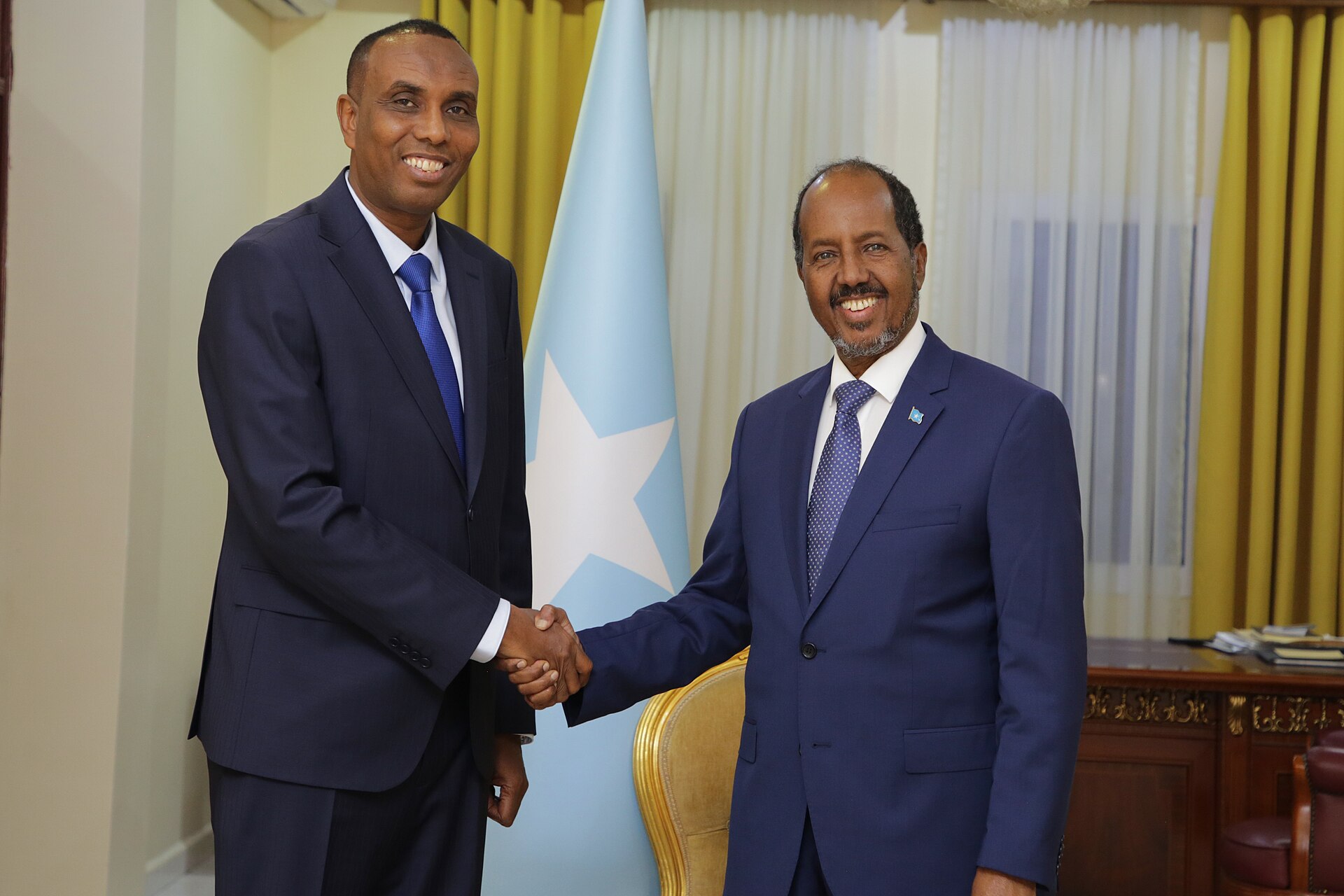

MOGADISHU, Somalia (HORN OBSERVER) — Add up four elections held in Somalia this year. A pattern shows up that has nothing to do with campaigning.
Adan Madobe won South West State's presidency 88 votes to 1. Ali Guudlaawe first won Hirshabelle's presidency 86 votes to 13, and is set to win it again this cycle. Abdulkadir Mohamed Nur Jaamac won the Speakership of Somalia's House of the People 142 votes to 30. In Galmudug, the ruling party didn't even bother with a vote count: it simply crowned Liibaan Shuluq its only candidate before a single ballot was cast.
In every one of these contests, the man who ended up in charge was the man President Hassan Sheikh Mohamud had already chosen. The elections that followed weren't real contests. They were formalities.
Somalia's federal government has spent the past year promoting a genuine reform. For the first time in 57 years, citizens are voting directly for local councils and, in South West State and Galmudug, for their own state assemblies. That part is real. What isn't real is the idea that this has made the outcomes that matter — who actually runs the country — any less decided in advance.
The method has simply changed. It used to be arrests and bans. Now it's decoy candidates, military operations that clear the field before a vote happens, and party leadership that skips internal votes altogether. Different tools, same result: whoever Hassan Sheikh backs, wins.
Four elections, one pattern
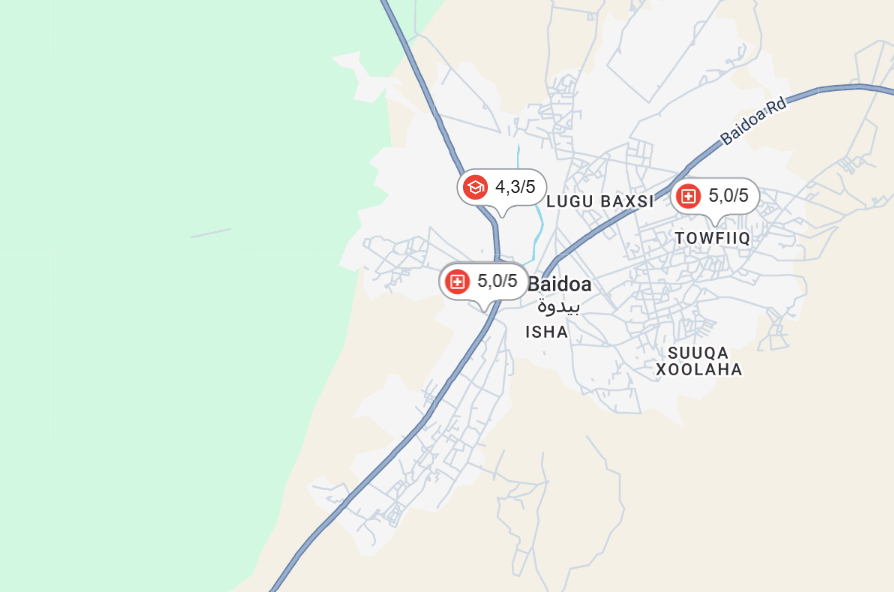
South West State went first. On June 10, 2026, ninety members of a genuinely, directly elected parliament gathered in the city of Baidoa to choose a president. Madobe — who was already the sitting Speaker of Somalia's federal parliament, and refused to give up that job while running for a second one — took 88 votes. His only opponent, Abdiaziz Jawari, took one.
Jawari wasn't a real rival. He was what Somalis call a malxiis: a stand-in candidate who exists only to make a one-sided vote look like a contest, then loses on schedule.
Ten weeks earlier, Madobe's own predecessor, Abdiaziz Laftagareen, had been forced out of that same city by federal troops for refusing to accept Hassan Sheikh's plans. It's a reminder that the older, blunter method hasn't gone away. It's just being used alongside the newer one.
Hirshabelle shows this isn't limited to one election. Guudlaawe first became Hirshabelle's president in November 2020, winning 86 votes to 13, backed by then-President Mohamed Abdullahi Farmaajo. Twelve federal presidential hopefuls then — Hassan Sheikh among them — signed a joint letter accusing Farmaajo's government of rigging that race for its own pick.
Six
years later, the man who signed that letter benefits from an almost identical
arrangement. Hassan Sheikh and Guudlaawe signed a deal in April 2026, months
before campaigning began, guaranteeing Guudlaawe the ruling party's ticket. A
rival push by Hawadle clan elders came and went without threatening him.Hirshabelle’s local elections, originally set for August 20, were postponed by Somalia’s electoral commission the day before the vote,
with a new date due within two weeks.. Whenever the presidential vote happens, nobody expects a surprise.
Galmudug shows the same instinct, applied even earlier. Sitting president Ahmed Abdi Kariye "Qoorqoor" wanted a second term. After negotiations involving Somalia's intelligence chief and the prime minister, he withdrew in June. Two days later, the ruling party crowned Liibaan Shuluq — a businessman with no political track record — as its only candidate, with no internal contest.
Galmudug's local elections, held July 30, were genuinely direct: citizens voted for real council seats and lawmakers. But the presidential nomination never touched those voters at all. It was decided inside the party before the newly elected lawmakers had a chance to weigh in.
The Speakership shows how far the pattern reaches beyond the ballot box entirely. Jaamac's path to that office began with a military operation, not a vote. When federal troops removed the previous South West State president from Baidoa in March 2026, a parliamentary seat connected to the old administration was handed to Jaamac within ten days — no election involved. From that seat, he went on to win the Speakership itself on August 10, 142 votes to 30, against a token opponent, Abdulkadir Omar Moallim, in a vote that lawmakers from Puntland and Jubaland boycotted as illegitimate.
Where the word "malxiis" comes from
The word doing the real work in this story — malxiis, roughly "a stand-in" — isn't new. It wasn't invented to describe 2026.
A civil society observer report on Somalia's 2021–22 parliamentary elections found that 134 of the 275 House of the People seats were won by a single candidate who received every available delegate vote, after a second candidate registered only to meet a minimum-competition rule, then quietly withdrew before the vote. Marqaati, a Somali election watchdog, documented the price tag: in Galmudug, House of the People seats could cost up to $2,000 per delegate vote — roughly $202,000 for a single seat, the most expensive in the country that cycle.
Even the seats where a vote genuinely happened weren't necessarily any cleaner. Marqaati's own conclusion was that vote-buying and rigging "succeeded in electing virtually all their desired candidates to parliament." A prominent opposition politician, Abdirahman Abdishakur Warsame, was already warning publicly about "a malxiis election" back in 2020.
What's different now is where the tool is being used. It once decided who filled minor parliamentary seats. Now it decides who runs entire regions of the country.
There's an irony worth sitting with here. Warsame's own seat may have been won the same way. When he ran for his own parliamentary seat, based in Dhusamareb, in February 2022, his most credible rival, Naciima Xuseen Cali, withdrew from the race before voting began, clearing his path to an uncontested win by a show of hands, 86 votes to none. The man who named the malxiis pattern and warned the country about it appears to have benefited from it too.
The exception that proves it
If Hassan Sheikh's backing were simply a reliable sign of who Somali institutions were going to pick anyway, none of this would be especially damning. What turns it from coincidence into a real mechanism is what happens when someone outside his circle tries running the exact same playbook. This year gave Somalia two clear test cases, and both failed the same way.
South West State, before Madobe. On March 28, 2026, South West's newly sworn-in parliament elected its Speaker. Less than an hour later, it voted to give Abdiaziz Laftagareen a second term as president, 66 votes to 13, against a single opponent. The whole process was finished in a single day. One outlet called it an "election coup."
It didn't matter that Laftagareen had just done, on a smaller scale, what Madobe would later do to win the same job: run a fast, lopsided vote against a token rival. The federal government refused to recognize the result. Within 48 hours, Somali army units had taken Baidoa. Laftagareen resigned and fled to Nairobi.
Ten weeks later, Madobe was elected in that same city. This time, nobody in Mogadishu questioned a thing.
Jubaland. Ahmed Madobe — no relation to Adan Madobe — has led Jubaland since 2013, entirely outside Hassan Sheikh's political camp. In November 2024, he changed his own region's constitution to remove term limits, set up his own election commission, and won a third term after opposition candidate Ahmed Safi was effectively kept off the ballot. People on the ground called it afterward a "closed political space" — a managed election in every way but name.
None of that mattered to Mogadishu. The federal government rejected the result anyway, calling it a "theatrical project," and has never accepted it since. Hassan Sheikh confirmed as recently as June 12, 2026, in a radio interview, that the federal government still refuses to recognize Madobe's win.
The dispute has gone far beyond words. Both sides have issued arrest warrants for each other's leaders. A Mogadishu court has charged Madobe with treason. Jubaland's own courts have countered with corruption charges against Hassan Sheikh. Somali a
rmy units clashed with Jubaland's forces in December 2024.
This kind of standoff isn't new, and it isn't limited to these two cases. Mogadishu has spent years trying to bring federal states it doesn't fully control back into line. Puntland, which has rejected the federal government's election plans and pulled its own recognition of Mogadishu, shows the same dynamic.
The contrast tells the real story. A managed election, run by Hassan Sheikh's own side, gets certified within hours as democratic progress. The identical kind of managed election, run by someone outside his circle, gets denounced as theater — or simply overrun by federal troops — and rejected for years. Legitimacy in Somalia was never really about how clean the process was. It was about who was in charge of it.
The world is applauding anyway
None of this has slowed the praise coming from abroad. In early August, Somalia's National Independent Electoral and Boundaries Commission briefed ambassadors from the United States, United Kingdom, China, Turkey, Ethiopia, Kenya, Sudan and Egypt, along with officials from the United Nations, African Union and Organization of Islamic Cooperation, on the progress of the country's move to direct voting. The commission's chairman told the gathering that Somalis have, for close to 57 years, finally had the chance to choose their own representatives. The diplomats reportedly welcomed the news.
What they were applauding was a genuine reform at the level of local councils and state assemblies. It sits on top of a system for choosing presidents and speakers that, this year, has not once produced a result Hassan Sheikh didn't already choose.
Somali political analysts have made versions of this same point. One has noted that despite the new one-person-one-vote law, recent parliamentary seats, state assemblies, and even Mogadishu's own mayoral post were all filled without any meaningful say from the public — exactly the gap this story traces at the presidential and Speaker level.
The math doesn't lie
Somalia isn't new to managed elections. For much of the past decade, the country chose its leaders through pools of 101 hand-picked delegates rather than any real vote at all. What's changed under Hassan Sheikh isn't the existence of a predetermined outcome. It's how sophisticated the method for producing that outcome has become, and how confidently it now gets sold as progress.
Four elections decided this year. Four of his picks seated. Two rivals tried running the identical playbook. One lost his job to federal troops within 48 hours. The other still can't get Mogadishu to even acknowledge his win, two years on.
The numbers say it plainly: 88 to 1. 86 to 13. 142 to 30. Somalia's newest elections were free enough to count the votes. They were not free enough to leave anyone guessing who would win.
ABOUT THE AUTHOR
Ismail Abukar is Co-Founder and Chairperson of the Organization for Prisoners' Rights (OPR), an independent civil society organization based in Mogadishu, Somalia. He has conducted primary field research in Somalia for seven years, covering prisoners' rights, enforced disappearances, press freedom, and electoral corruption. His investigations have been published by African Arguments and Horn Observer, including "Somalia's New Speaker Got His Seat Through a Military Operation,""The Disappeared," and "A Government With One Foot Out the Door: Somalia's Foreign Passport Crisis." He holds an MA in International Law and Human Rights from the University for Peace (UPEACE) and maintains an active ORCID record: 0009-0003-1435-3691.
- Popular
- Rated
- Commented


04/11/2021 - 11:05:02

28/05/2024 - 15:44:10


18/08/2025 - 17:22:07

01/03/2021 - 09:00:37



Opinions
16/09/2026 - 16:11:57
15/09/2026 - 16:56:43
Politics
06/10/2026 - 18:48:48
06/10/2026 - 15:14:30

02/10/2026 - 17:35:54
Terror Watch
06/10/2026 - 21:41:19

06/10/2026 - 21:03:29
29/09/2026 - 14:38:38
Press Releases

05/10/2026 - 19:10:20
30/09/2026 - 22:54:31




The Guarantee: How Somalia's Elections Always Land Where Hassan Sheikh Wants Them
88-1. 86-13. 142-30. Four offices, three mechanisms, one result.