

Hassan Sheikh Knew About the UAE for Years. Now It Is Useful
 0
- Visits: 111
-

- Share
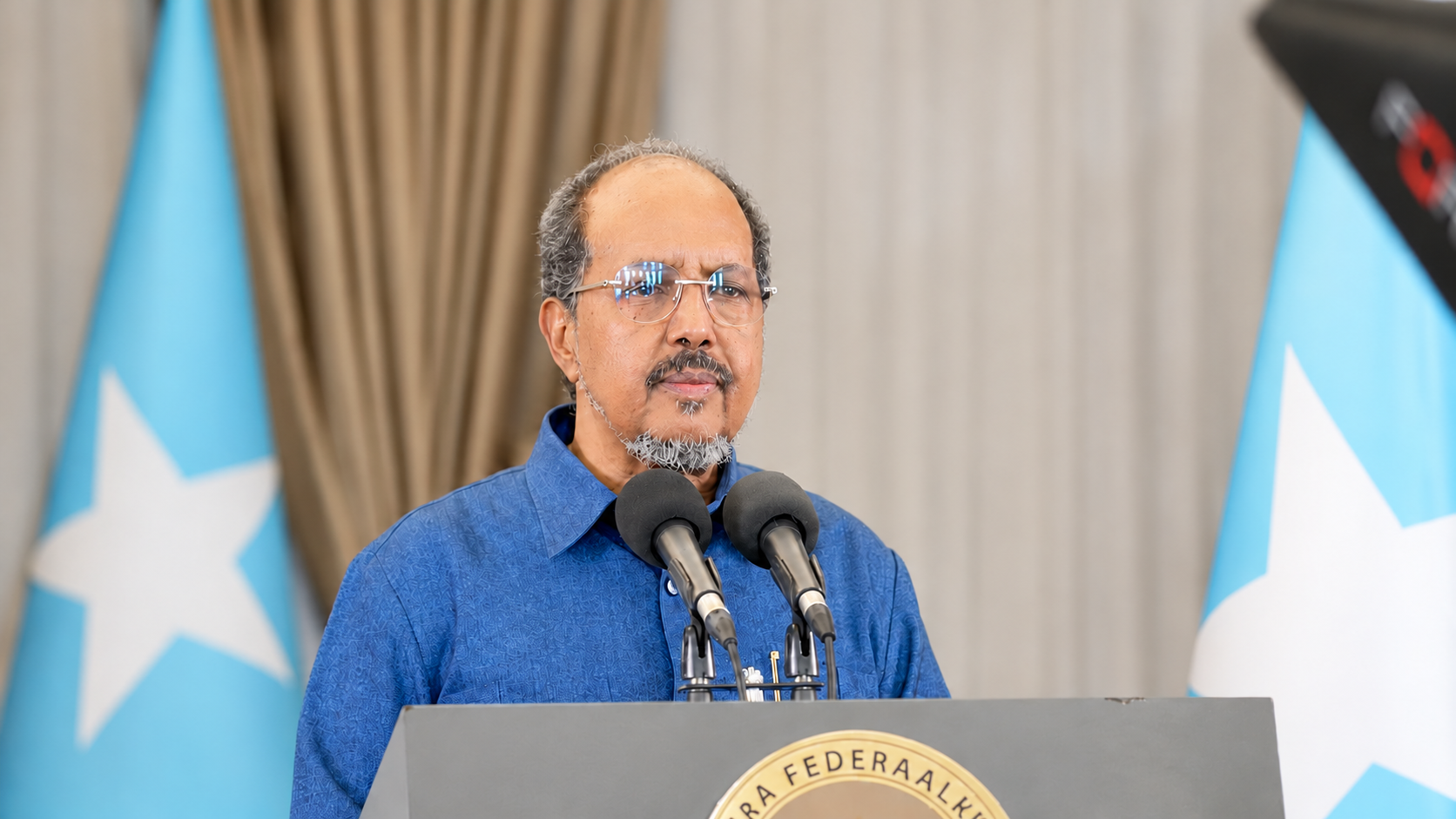

On Tuesday, 17 November, the president of Somalia went on television and, as I heard it in Somali, said that a brother does not burn your house. Hassan Sheikh Mohamud told Somalis at home and abroad that the United Arab Emirates had signed port deals at Berbera, Bosaso and Kismayo without Mogadishu, built armed units that do not take orders from the state, and helped bring about Israel's recognition of Somaliland. He ended by saying that the Somalia of yesterday is not the Somalia of today. Anadolu Agency reported the accusations.
Here is what does not fit. He has known about the UAE for years. Africa Confidential reported that his team suspected Emirati involvement in Ethiopia's 2024 deal with Somaliland, and in March 2025 he was in Abu Dhabi, where the UAE's news agency WAM said the UAE president received him. In January he went on television to say that his cabinet had cancelled every agreement with the UAE. Each charge in the new speech that I could date goes back to December or January, so no new Emirati act explains a speech on 17 November. Something changed in Mogadishu, not in Abu Dhabi. My argument is that what changed was the legal ground under his own feet, and that the speech is aimed at Somalis at home, not at the UAE.
The Five Charges: What Holds Up and What Does Not
Some of what he said is documented. In January, Arab News reported that the Saudi-led coalition fighting in Yemen said Aidarous al-Zubaidi, the leader of Yemen's southern separatists, reached Abu Dhabi on a plane from Mogadishu. In December, the African Mirror reported that the UAE declined to sign the joint statement of 21 countries against Israel's recognition of Somaliland. Both facts are real. But Khaleej Times reported that the UAE also chaired the Arab League session that condemned the recognition, and the Somali Guardian reported that in a joint statement with the African Union it said it supports Somalia's sovereignty and territorial integrity. I found no proof that it brought the recognition about. That charge is a belief inside Mogadishu, not a finding.
The port charge is the strongest in law and the weakest in practice. The Namibian reported that Somaliland answered the January cancellation by saying its deals remain lawful and binding, and Dawan reported that Puntland said its cooperation with the UAE and the Bosaso port project would go on. Ten months later he was still listing the same three ports. A cancellation that cannot be enforced is a statement, and Abu Dhabi has been free to treat it as one. If the January decision changed nothing on the ground, a second speech will change nothing either. So its audience is somewhere else.
Years of Silence: Then a Break That Changed Nothing
For most of this term, silence was useful to him. The Washington Institute noted that when he returned to power in 2022, the UAE resumed training and paying Somali army cadets, a programme that had ended in the 2018 quarrel with his predecessor. In his second and third years he suspected the UAE and kept going to it. Geeska described the March 2025 visit as widely read as a plea for help while al-Shabaab was inflicting heavy losses in Middle Shabelle. I could not confirm that purpose from an official source, which says only that he was received warmly.
The break came in year four. Israel recognised Somaliland on 26 December, and on 12 January the cabinet cancelled every agreement with the UAE, Africanews reported. The New Arab reported that Somaliland, Puntland and Jubaland rejected it the next day. Mogadishu had cut ties with a partner whose money and training it had relied on, and the regions that held the ports simply carried on.
Year five began in May, when, according to the court, his four-year term ended. In March, Kormeeraha noted, parliament had approved a one-year extension after clashes, and the opposition and the regions refused to accept it. From then on, the UAE stopped being a foreign problem and became a domestic one. On 7 October, Dawan reported that former president Sharif Sheikh Ahmed said his trip to the UAE was for family reasons and should not be used as a pretext to target opposition figures. In late October a former intelligence chief claimed that the leaders of Puntland, Jubaland and Somaliland had met in the UAE to plan an alliance against the president. I reported at the time that the claim is unverified and that no one has shown an agreement. It cannot carry this argument. But it shows that the story was already being told, and waiting for a moment to be used.
Why Now: The Price of Silence Changed
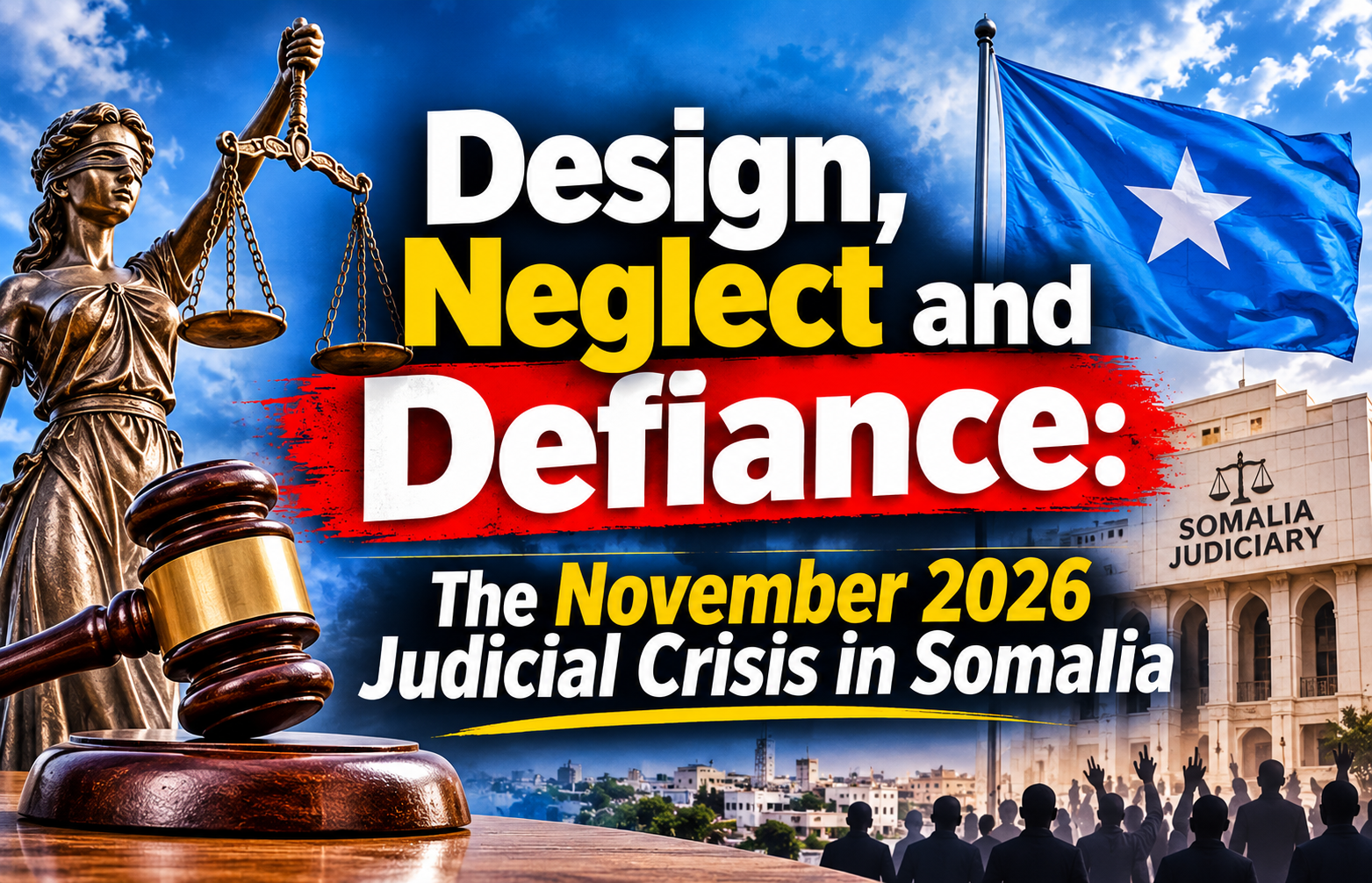
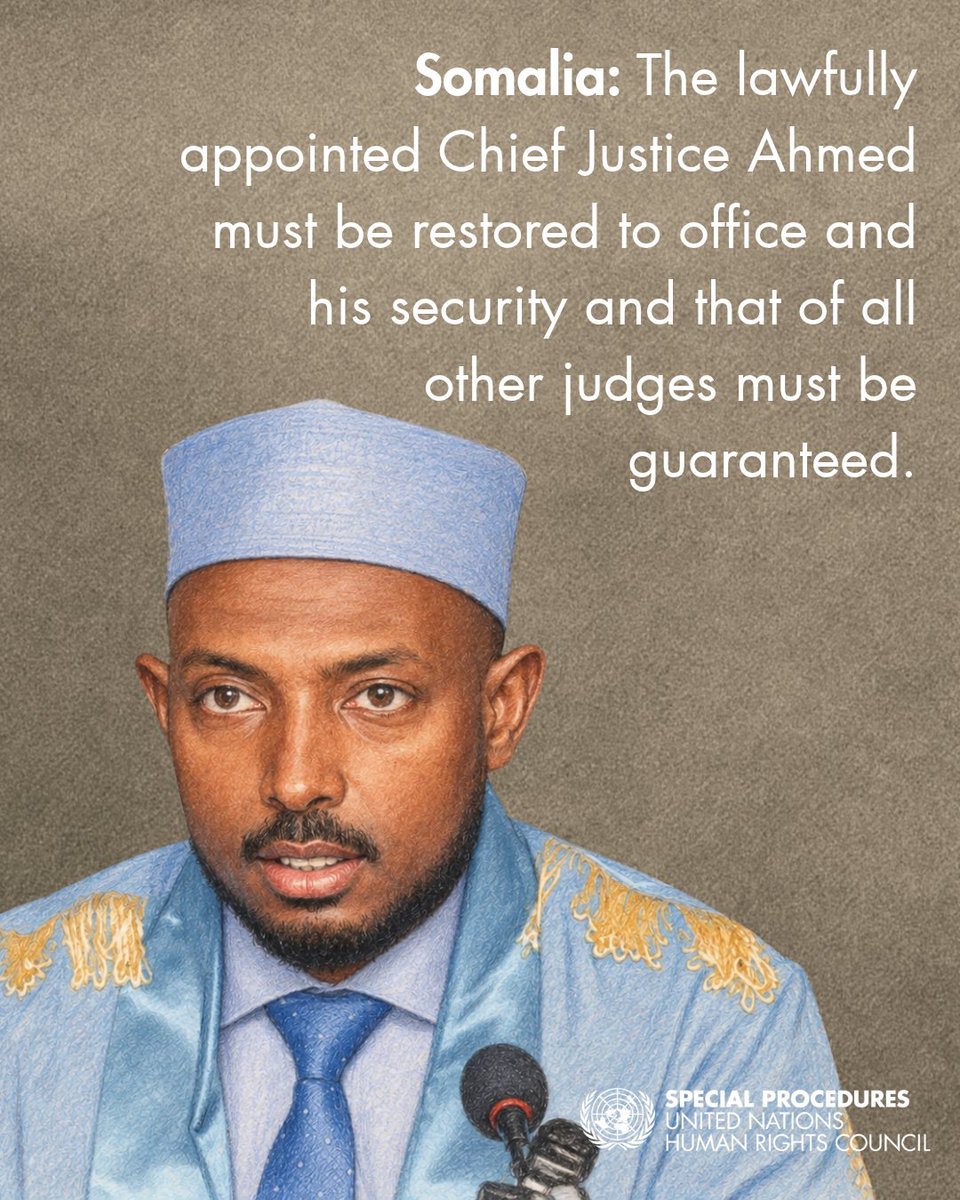
What was missing was a need. Until 5 November the president could say that his term ran to May 2027 and that elections could wait for April or May. Late on 4 November, Ahram reported, he announced the dismissal of the chief justice. The next day the Supreme Court said the dismissal was void and ruled that his term ended on 15 May, that the extension was unlawful, and that, after 30 days to agree election rules, elections must be held within 90 days, though reports do not say from which date. On Friday, Dawan reported, the Attorney General's office rejected the ruling, and Hiiraan reported that the president reinstated the former chief justice, Ibrahim Idle Suleiman, who was sworn in on Saturday. Twelve days later he spoke about the UAE.
I think this is the answer to why now. I cannot prove it, because no one outside Villa Somalia, the presidential palace, can know the motive. But the order is hard to ignore. For three years, the UAE was worth more to him as a partner than as an enemy. In year four it turned out to be a partner that would not rein in the regions. By November, with the court saying his term was over, it was worth more to him as an enemy. A president who cannot answer the judges can still answer the UAE. I think he could not attack the court a second time, because the dismissal had just failed, and the UAE is an opponent that no judge can rule against and that most of his domestic critics cannot defend without being called disloyal.
Four Gains: What the Speech Buys at Home
Four gains follow from that, and they are my reading. The first is a rally around a threat that is not the court. On the day of the speech, Dawan reported that Defence Minister Ahmed Moallim Fiqi wrote on Facebook that radio stations and journalists working for the UAE should be closed, and that the militias the UAE had armed should be put on the terror list. He named no station, no journalist and no militia, and offered no evidence. Whatever the intention, it moves the argument from who may govern to who is loyal.
The second is pressure on the regions and the opposition. The Somali Guardian reported that the Somali Future Council, the main opposition group, includes the presidents of Jubaland and Puntland, the same two states that keep their port and security ties with the UAE. When Mogadishu calls the UAE's friends traitors, it is also describing the people who rejected the extension and who now have a Supreme Court ruling on their side. A constitutional argument becomes a sovereignty argument, and the president is better placed to win that one.
The third is money and protection. After the January break, Somalia signed defence agreements with Qatar and Saudi Arabia, Dawan and Al Jazeera reported. Four days before the speech, The Star reported that Turkey and Qatar signed their own mutual defence agreement. That pact protects those two countries, not Somalia. But it shows Ankara, Doha and Riyadh drawing closer, and a louder quarrel with the UAE fits what that group wants. I believe Qatar has taken over some of the soldiers' salaries the UAE used to pay, but I could not confirm it, so it is my analysis, not fact. The fourth gain is simple: for a few days, the talk is about the UAE and not about the ruling.
The Objections and the Risks: What He Stands to Lose
The hardest objection is the Turkey and Qatar pact, signed on 13 November, inside the same twelve days. It may be the real trigger, because it gave him partners who would not mind a fight. I think the pact is the cover and the court is the reason. Cover makes a speech easier to give, but only a reason makes someone give it, and nothing else in those twelve days threatened him as much as losing his legal claim to office.
The second objection is the court itself, and the president's side has real arguments. Horseed Media reported that he announced the dismissal while the chief justice, Bashe Yusuf Ahmed, was abroad and before the case had been heard, and the ruling followed within a day, so his side can say a sacked court ruled against him. Bashe says, Dawan reported, that the court heard and decided the term case on the same day his dismissal was announced. I could not verify that order, and the two accounts do not match. Horseed Media reported that Fiqi argues the judges were both a party and the decider, and that the same judges had accepted the new constitution when they approved elections in South West, Galmudug and Hirshabelle. A Somali Facebook post also announced Bashe's press conference on 7 November as taking place at Sharif's house, but I found no news report that confirms it.
The evidence on the other side is stronger than the president's side admits. The East African reported in 2018 that Bashe was appointed by a different president, Farmajo. In August this same court cancelled the Galmudug election results, Dawan reported, where the president's own party had won, and the party accepted the ruling. Kormeeraha reported that the term ruling came unanimously from five judges, and ConstitutionNet reported that it rejected part of Sharif's own petition. Two UN experts said on 12 November that the dismissal did not follow constitutional procedure, which requires approval by parliament or a proposal from the Judicial Services Commission, and the government rejected their statement. My argument does not depend on the court being right. It depends on the fact that the country's highest court has declared his term over, and that the opposition, Puntland and Jubaland now repeat it.
The risk is that the speech works against what he needs most. He needs Puntland and Jubaland to agree on election rules, and the speech makes their leaders look like agents of a foreign power. If they hear a threat, they have every reason to stay close to Abu Dhabi, and the speech will have strengthened the tie it attacked. Mogadishu has cheaper tools: it can still accept the court's 30-day window, and it can still sit down with the two states. The UAE could have done more too. It says it supports Somalia's sovereignty, yet Mogadishu says it dealt with the regions and left the capital out, which is lawful in a region's eyes and hostile in Mogadishu's.
My reading can be tested in the next few weeks. If he is serious about the UAE, the next step will be something he can enforce, such as the flight ban from January or action against UAE-linked companies in Mogadishu. If the speech is a message to Somalis at home, the next step will be about the election talks and the court. We do not know whether Abu Dhabi will answer, or whether the defence minister's calls will become policy and not just a post. The president said his door is open if the UAE shows respect. The harder question is whether the doors inside Somalia are open, to Garowe, Kismayo and the opposition in Mogadishu, and a speech against Abu Dhabi cannot settle that.
Right of reply: The UAE government and the Somali presidency were not asked for comment before publication
AUTHOR BIO
Ismail Abukar is an independent investigative journalist whose reporting focuses on Al-Shabaab, political accountability, arbitrary detention, and the marginalization of minority communities in Somalia. He is a volunteer editor at Horn Observer, the founder and editor of The Field, and Co-founder and Chairperson of the Organization for Prisoners’ Rights (OPR), an independent civil society organization based in Mogadishu. His work draws on seven years of primary field research, including more than 500 interviews with convicted Al-Shabaab operatives and more than 400 military court cases reviewed. His investigations have appeared in African Arguments, Lawfare, Pambazuka News, the Review of African Political Economy, Baidoa Online, and Horn Observer. He holds an MA in International Law and Human Rights from the University for Peace (UPEACE). ORCID: 0009-0003-1435-3691.

- Popular
- Rated
- Commented


04/11/2021 - 11:05:02

28/05/2024 - 15:44:10



18/08/2025 - 17:22:07

01/03/2021 - 09:00:37



Opinions
13/11/2026 - 18:05:57
13/10/2026 - 15:21:04
16/09/2026 - 16:11:57
Politics
18/11/2026 - 12:40:58
29/10/2026 - 21:44:21
Terror Watch
29/10/2026 - 18:42:36

27/10/2026 - 22:28:43
Press Releases
13/11/2026 - 18:24:36


Hassan Sheikh Knew About the UAE for Years. Now It Is Useful
MOGADISHU, Somalia | November 18, 2026| President Hassan Sheikh Mohamud's televised attack on the United Arab Emirates asks nothing that Abu Dhabi has to answer. The UAE did not change; his need did, twelve days after the Supreme Court said his