

Somalia: How Sadia Bajaaj Was Convicted — Inside the Judge Swap and the Pressure Behind Her Case
 0
0 - Visits: 3731
-

- Share
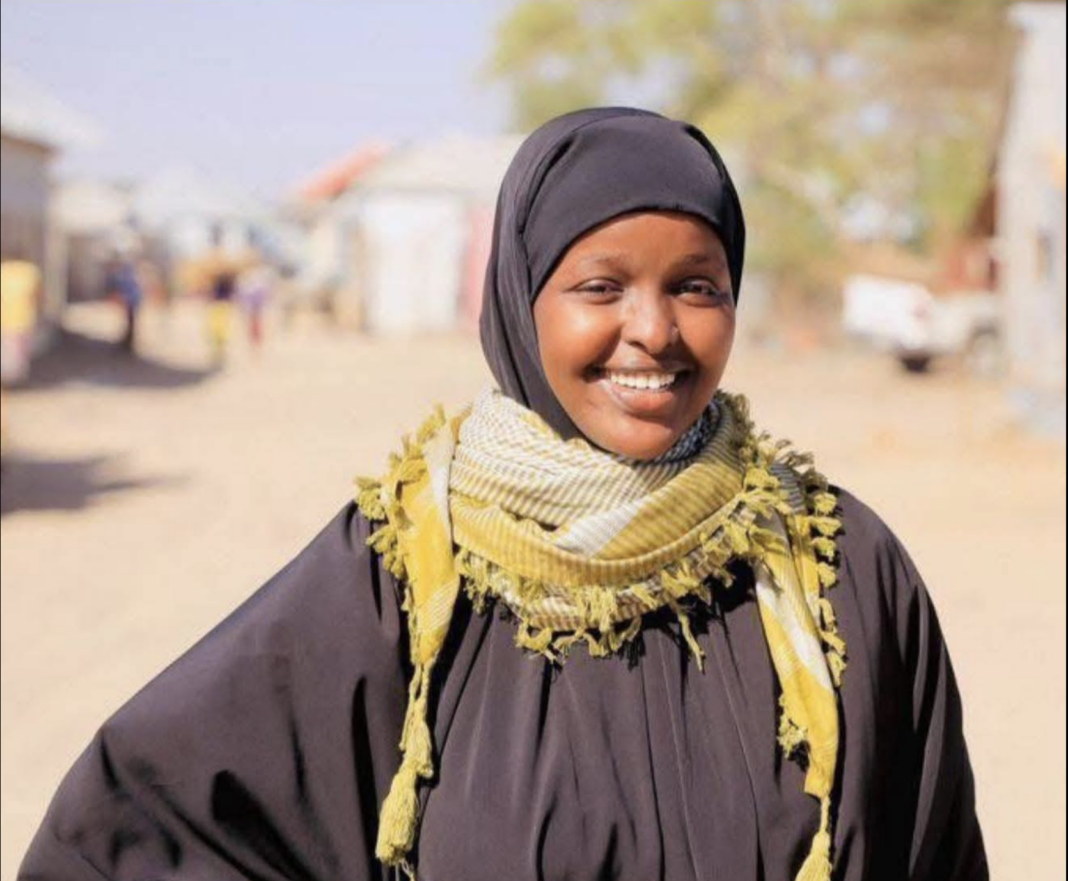

According to her legal team and a review of court proceedings, a judge was swapped out mid-trial, and the Attorney General's office pushed the case at both the trial and the appeal.
A Conviction That Almost Didn't Happen
Sadia, a tuk-tuk driver turned social media activist, was arrested twice in 2026. The first time, on March 12, she was held four days after joining protests over rising fuel prices, then released without charge. The second arrest came April 12, when officers from Somalia's National Intelligence and Security Agency (NISA) detained her in Mogadishu's Hodan district. The trigger was a video in which she criticized government corruption and the president directly.
Her first hearing, on June 1, centered on two charges: defaming government institutions and incitement. Prosecutors showed the court a video in which Sadia said police officers had threatened her with rape. The judge rejected the charges as too vague and sent the case back for more evidence.
Within a week, that judge was replaced. The new judge, Saalax Cali Maxamuud, known as "Saalax Dabaan," convicted Sadia on June 25 and sentenced her to three years. The charges had shifted to public incitement and abuse of power involving government officials. Kaab TV reported that the switch alarmed observers, and that media access to the courtroom was tightly restricted — reporters were barred from entering, and cameras and notebooks were blocked.
Sadia raised the judge swap herself. In a letter written from Mogadishu Central Prison and circulated byKaab TV, she said she had not confessed or pleaded guilty, and that she believed she was being punished for her opinions, not a crime. She said she did not want a presidential pardon, since accepting one would mean admitting guilt. Instead, she asked for an independent judge, full access to her case file for her lawyers, medical care for asthma she said had gone untreated in custody, and consideration of her young child.
The Attorney General's office stayed closely tied to the case in public, too. Attorney General Suleiman Mohamed Mahmoud briefed reporters on the case more than once, updating them on the investigation and when it would go to trial. In one briefing, he said Sadia had been arrested on April 21, 2022 — the wrong date and the wrong year. She was arrested on April 12, 2026. He also used these briefings to complain about what he called false information spreading on social media and in some outlets, saying it was hurting public trust in the justice system. His office also put out a statement defending the case against Sadia as part of its duty to uphold the law, and warned that anyone doing the same thing would face the same treatment.
According to a member of her legal team, the Attorney General also personally monitored the first-instance hearings and later tried to influence the appeal. That attempt, the source said, failed. The appeal court, chaired by Judge Abdifatah Mohamed, ruled that Sadia's conviction "was not based on sufficient formal grounds related to the charges against her" and ordered her release. Judge Abdifatah told Raxanreeb Online that his ruling was meant to show the importance of judicial independence, and that he was not swayed by the political pressure alleged in the case.
A Wider Pattern
Neither the judge swap nor the pressure claims stand alone. Human Rights Watch has long documented how Somali judges remain exposed to outside influence, given weak protections around how they are appointed, kept in office, or moved. Sadia's case is not the only one raising questions about the Attorney General's reach into politically sensitive matters. In January 2026, the same office dropped a criminal case against the President of Jubaland that was already before a regional court — a move the Legal Archives Center said raised concerns about how the office handles politically sensitive cases.
NISA's role in Sadia's case fits a pattern too. The agency has repeatedly been documented detaining journalists and activists without clear cause, and using broad surveillance powers over phones and the internet. In May 2026, NISA and a counter-terrorism police unit abducted and beat journalist Mohamed Ibrahim Osman, known as Bulbul, and interrogated him specifically about an article he had written on violations against Sadia. Kaab TV also reported that NISA sent operatives posing as activists and journalists to infiltrate opposition circles, and that Sadia was swept up in the wider crackdown that followed.
The pattern continued into the final weeks of her case. On June 30, armed NISA officers abducted journalist Mascuud Warsame, founder of the outlet Xogbile Media, outside his office in Mogadishu. He was first taken to a police station in Hodan district — the same district where Sadia was arrested — then moved to a NISA facility near Mogadishu port, where he was held 39 days without charge and never brought before a court. The Somali Journalists Syndicate said he was repeatedly questioned about his social media activity and his reporting on Southwest State's leadership, held in a dark, hot cell, and collapsed twice before his release on August 8. SJS said the case reflects a broader pattern: Somalia's security agencies used to intimidate journalists and activists instead of pursuing them through the courts.
Critics have raised another possible factor behind Sadia's sentence: her clan. The Somali Guardian reported that young people who made similar comments, but who came from more powerful Hawiye clans with influence in Mogadishu, were released quickly. Sadia, from a smaller and more marginalized clan, was not.
What Remains Unconfirmed
Public reporting backs the judge swap, the restricted courtroom access, the Attorney General's public statements on the case, and NISA's pattern of surveillance and intimidation. It does not yet independently confirm that the Attorney General personally monitored the trial hearings or tried to pressure the appeal court — claims that, for now, rest on Sadia's legal team. There is also no public record tying a specific NISA unit to her original arrest.
Sadia's case has closed with her release. The question of who inside Somalia's courts and security forces pushed for her conviction — and why — remains open.
_________
ABOUT THE AUTHOR
Ismail Abukar is Co-founder and Chairperson of the Organization for Prisoners' Rights (OPR), an independent civil society organization based in Mogadishu, Somalia. He has conducted primary field research in Somalia for seven years covering prisoners' rights, enforced disappearances, press freedom, and electoral corruption. His investigations have been published by African Arguments, Lawfare, and Horn Observer. He holds an MA in International Law and Human Rights from the University for Peace (UPEACE). ORCID: 0009-0003-1435-3691 | [email protected] | opr.org.so

- Popular
- Rated
- Commented


04/11/2021 - 11:05:02


28/05/2024 - 15:44:10


18/08/2025 - 17:22:07

01/03/2021 - 09:00:37



Opinions

13/10/2026 - 15:21:04
16/09/2026 - 16:11:57
Politics

06/10/2026 - 18:48:48

06/10/2026 - 15:14:30

02/10/2026 - 17:35:54
Terror Watch
06/10/2026 - 21:41:19

06/10/2026 - 21:03:29
29/09/2026 - 14:38:38
Press Releases


12/10/2026 - 13:44:28




Somalia: How Sadia Bajaaj Was Convicted — Inside the Judge Swap and the Pressure Behind Her Case
MOGADISHU, Somalia (HORN OBSERVER) — On August 12, the Banadir Regional Court of Appeal overturned Sadia Moalim Ali's three-year prison sentence, freeing the activist known as Sadia Bajaaj after 122 days in custody. The release was widely