

Somalia: How Mogadishu Removes a Regional President. It Costs Cash, or It Costs an Army
 0
0 - Visits: 5794
-

- Share
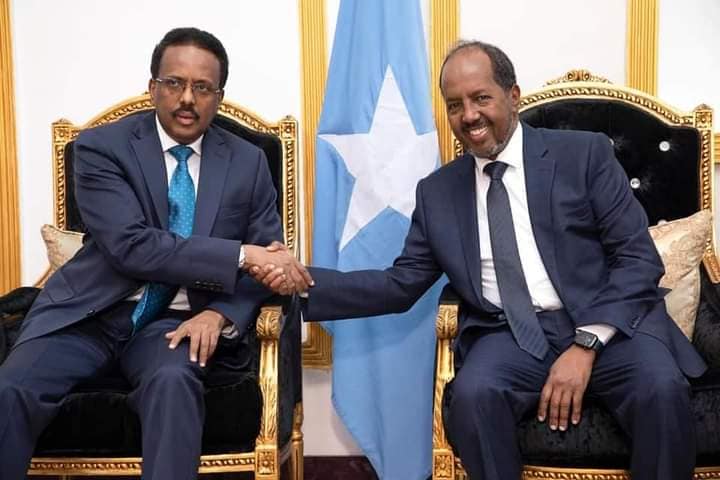

An investigation into South West State, Hirshabelle, and Galmudug found that federal governments — Farmaajo's and now Hassan Sheikh Mohamud's — have used two tools to control who governs the regions. The first is cash. The second, used once so far, is force.
The First Payment
In 2018, South West State's president, Sharif Hassan Sheikh Aden, stood in the way of Mogadishu's plans. He had a strong clan base and his own political network. He was not easy to remove.
So Mogadishu paid him. According to sources with direct knowledge of the negotiations, Sharif Hassan received about two million US dollars from the federal government to resign and stay out of the next election. He stepped down in November 2018 and never ran again. No parliament ever saw the payment. No budget ever recorded it.
The Election That Followed
With Sharif Hassan gone, Mogadishu backed a new candidate, Abdiaziz Laftagareen. His main rival was Mukhtar Robow, a former al-Shabaab commander who had defected and built real support in Bay and Bakool.
On December 13, 2018, Ethiopian troops working alongside Somali federal forces arrested Robow at the regional presidential compound and flew him to Mogadishu. Protests broke out. Security forces opened fire on crowds. At least 11 people were killed, according to Reuters and the BBC. Six days later, Laftagareen was elected. He faced no real opponent.
The Same Man, Removed the Same Way
Eight years later, the man Mogadishu had installed became the man Mogadishu removed.
In early 2026, Laftagareen broke with President Hassan Sheikh Mohamud over changes to the constitution that would extend federal officials' terms from four years to five. He quit his post in the ruling party. South West State began cutting ties with the federal government.
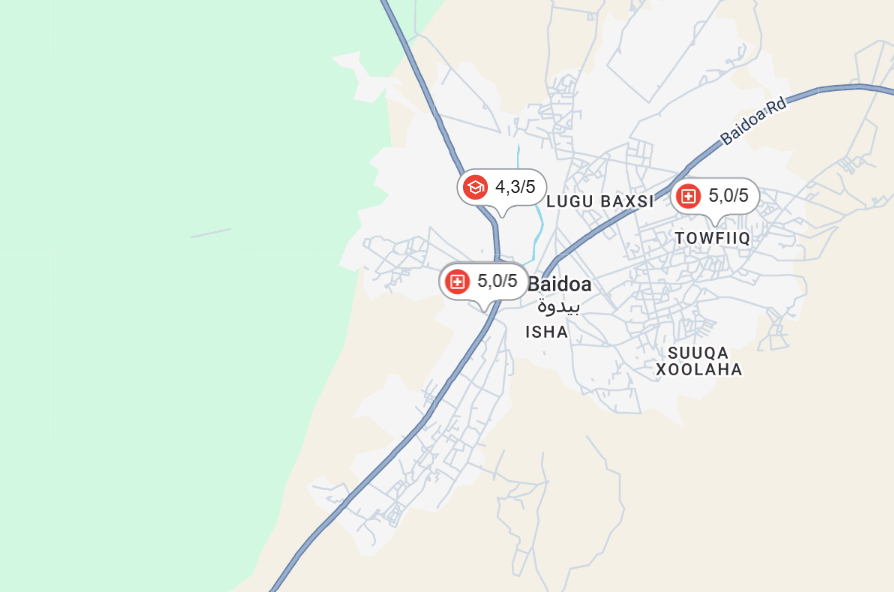
In March 2026, federal troops — including Turkish-trained units in armoured personnel carriers — entered Baidoa. Regional forces could not hold the city. Laftagareen fled. A new president, Adan Madobe, was installed under curfew. This time, there was no payment. Only troops.
Laftagareen has never accepted that outcome. He says he was re-elected on March 28, days before federal troops moved in, and that he remains South West State's legitimate president. His forces have attacked Baidoa more than once since then — in May 2026, and again on August 17, when Somalia's Defence Ministry said federal troops killed 30 attackers and accused them of fighting alongside al-Shabaab. In late August 2026, South West State's own cabinet went a step further and formally declared Laftagareen's forces a terrorist group aligned with al-Shabaab. Laftagareen's office rejects the label, saying his forces are a lawful security force protecting the state's constitution.
Hirshabelle: The Same Deal, Now Renewed
Mohamed Abdi Waare was a Farmaajo ally, which should have protected him. It didn't. In 2020, when his presence in Hirshabelle became inconvenient for Mogadishu, sources say he was paid approximately $1.5 million to resign and not seek re-election — the same deal Sharif Hassan had taken two years earlier. Ali Abdullahi Hussein, known as Guudlaawe, was elected in his place.
Guudlaawe has stayed close to Mogadishu ever since. In April 2026, he and President Hassan Sheikh Mohamud struck a pact under which Guudlaawe would run for re-election on the ruling Justice and Solidarity Party's ticket. Hirshabelle now heads back to the polls on September 30, 2026, with Guudlaawe seeking a second term as the federal government's chosen candidate — the same arrangement, updated for a new cycle.
Galmudug: A Standoff, a Vote, and a Court That Threw It Out
In Galmudug, President Ahmed Duale Gelle tried a different approach in 2020. He refused to leave, and an armed standoff with forces loyal to Mogadishu followed. He eventually gave up and travelled to Mogadishu. According to the same sources, his exit came with a settlement of about $2 million.
Three states. Three presidents removed. Roughly $5.5 million paid out, none of it disclosed.
His successor, Ahmed Abdi Kariye — known as Qoor Qoor — announced on June 25, 2026, that he would not seek re-election, after talks involving Somalia's intelligence chief and the federal prime minister. Three days later, the ruling party crowned Liibaan Shuluq, a businessman who had never run for office before, as its sole candidate.
Galmudug held its vote on July 30, 2026. Shuluq's party won 63 of 87 seats. Somalia's Supreme Court threw the results out on August 23, ruling the process had violated the constitution and electoral law, after a challenge from a rival party. Shuluq publicly accepted the ruling. Galmudug now returns to the polls on September 30, 2026, alongside Hirshabelle — a rerun of an election Mogadishu's own candidate had already won.
What This Means
Somalia's constitution gives federal member states their own governments, their own parliaments, and their own elections. It says nothing about a president in Mogadishu paying regional leaders to resign, or sending troops when they won't.
A regional president who knows his survival depends on Mogadishu's approval, not his own voters, governs accordingly. He has little reason to build institutions that outlast him, and every reason to stay close to whoever controls the capital.
Mogadishu removed three regional presidents with cash. When one of its own appointees eventually turned against it, Mogadishu didn't need the money anymore. It sent tanks instead. On September 30, two more states will vote — and the pattern will show whether it has changed at all.
ABOUT THE AUTHOR
Ismail Abukar is Co-founder and Chairperson of the Organization for Prisoners' Rights (OPR), an independent civil society organization based in Mogadishu, Somalia. He has conducted primary field research in Somalia for seven years covering prisoners' rights, enforced disappearances, press freedom, and electoral corruption. His investigations have been published by African Arguments and Horn Observer. He holds an MA in International Law and Human Rights from the University for Peace (UPEACE). ORCID: 0009-0003-1435-3691 | [email protected] | opr.org.so

- Popular
- Rated
- Commented


04/11/2021 - 11:05:02

28/05/2024 - 15:44:10


18/08/2025 - 17:22:07

01/03/2021 - 09:00:37



Opinions
13/10/2026 - 15:21:04
16/09/2026 - 16:11:57
Politics
06/10/2026 - 18:48:48
06/10/2026 - 15:14:30
02/10/2026 - 17:35:54
Terror Watch
06/10/2026 - 21:41:19
06/10/2026 - 21:03:29
29/09/2026 - 14:38:38
Press Releases
12/10/2026 - 13:44:28


Somalia: How Mogadishu Removes a Regional President. It Costs Cash, or It Costs an Army
MOGADISHU, Somalia (HORN OBSERVER) — No president of a Somali federal member state has ever left office through a clean election. In three states over eight years, Mogadishu has removed sitting presidents using one of two methods: pay them to g