

Somalia: Blood, Blades, and Broken Streets: Inside the Terror Colonizing Mogadishu
 0
0 - Visits: 183
-

- Share


Speaking after his son's funeral at Muuse Boqor Mosque the following day, veteran journalist Maxamed Cumar Baakaay put words to what the killing meant: "Allah gave me my son, and now Allah has taken him back. I praise Him. We have survived so many historic atrocities here in Mogadishu, only for me to lose my boy to the blades of the Ciyaal Weero.” Family members say police have since detained several suspects, though authorities have not issued an official statement confirming the arrests.
A journalist mourning his university-bound son has shattered the illusion of security in central Mogadishu. His killers belong to the "Ciyaal Weero” (The Children of War) — a term that once described neighborhood kids trading pebble fights in the 1990s, and now names the drug-fueled youth syndicates that have emptied the capital's nightlife. This investigation traces how they built that impunity.
The Anatomy of Street Terror: How They Rule by the Blade
To walk Mogadishu at night is to navigate an invisible map of gang boundaries. The Ciyaal Weero don't merely rob; they terrorize to dominate, moving through neighborhoods in coordinated swarms of 15 to 35 people.
The "swarm and slash.” Unlike traditional muggers, Ciyaal Weero factions strike with machetes (baangado), firearms, or long daggers before a word is spoken. Residents report ambushes accompanied by shouts of "give him a proper beating … stab him,” leaving victims with severe facial and bodily trauma.
Neighborhood blackouts. In Kaaraan and Yaaqshid, gangs sabotage streetlighting or time raids to power outages, turning blocks into hunting grounds.
Commuter extortion. Factions use bright torches to blind victims and auto-rickshaws (bajaaj) for rapid getaways, according to Somali Public Agenda's reporting on the gangs' tactics. Tuk-tuk drivers describe paying "passage taxes” at makeshift blockades; those who refuse are dragged out and slashed.
A climate of fear. Ciyaal Weero violence routinely goes unreported in real time. Somali Public Agenda has documented, across several years, that residents in the capital's peripheral districts stay indoors once gangs are known to be active in a neighborhood, and that the gangs have restricted ordinary movement in those areas. Horn Observer could not independently confirm witness accounts from the night of Cabdiqani's killing.
The map of domination:
•Kaaraan-Amxaaro — birthplace of the blood feuds, deep alleys
•Yaaqshid outskirts — choked, unpaved transit corridors
•Deyniile periphery — expanding corridor of nighttime robberies
•Waberi and Wadajir — new frontiers of inter-district terror
Fueled by Chemical Rage and Digital Clout
What makes Ciyaal Weero attacks so unnerving is the members' apparent lack of empathy — a detachment fed by cheap drugs and a hunger for online attention.
Attacks are frequently planned out loud on TikTok: factions post stylized videos of blades and war poetry, naming the districts they intend to "raid” next. To dodge tracking and bans, members rotate through temporary handles anchored to hashtags like #ciyaalweero, #ciyaalkaraan, and #ciyaalxamar.
The drug economy behind this bravado has three tiers:
•Tramadol — the opioid engine. Cheap, potent, and the gangs' primary psychological armor; under its influence, members report losing all sense of fear.
•Injectable opioids and diazepam— a newer and more disturbing trend. Injected opioids mixed with sleeping tablets produce a state known locally as "Muraadaysi.” The addiction it creates pushes users toward increasingly violent crime to fund the next dose.
•Glue and benzene — inhalants used by the youngest recruits and homeless children (darbi-jiif), destroying brain cells and inducing erratic aggression.
Informal pharmacies (farmashiyaal) in Kaaraan and Yaaqshid break bulk controlled substances into single-dose portions priced $1 to $5 — a price point accessible even to youths caught in Somalia's youth unemployment crisis, which stood at 34.2 percent in 2025, according to World Bank and International Labour Organization estimates. Many fund their habits through phone-snatching.
The supply chain. None of this is manufactured domestically. Low-grade synthetic pharmaceuticals and cheap opioids are trucked across the porous Ethiopian border and repackaged for street sale. Counterfeit, industrial-strength Tramadol also arrives by rogue dhow across the Gulf of Aden, landing at unpoliced coastal villages outside Mogadishu before reaching the capital's black markets.
The Economic Toll
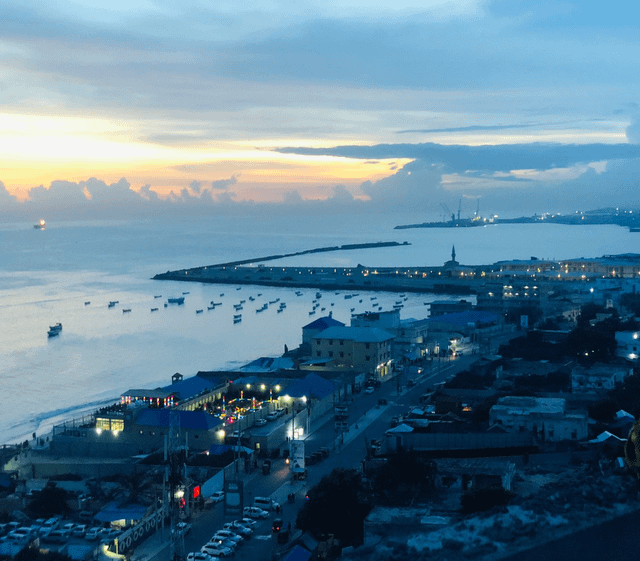
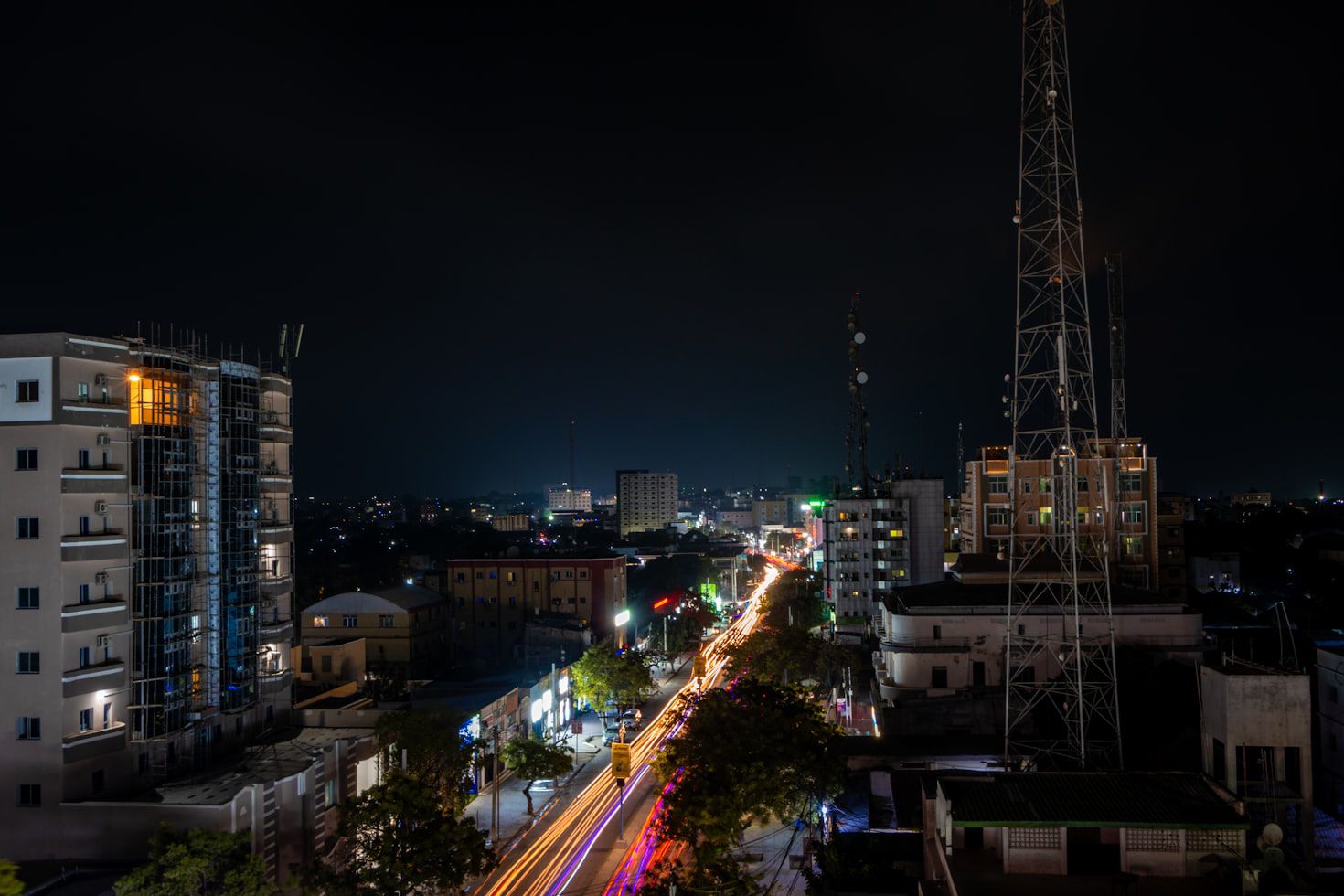
Mogadishu had been in the middle of an economic revival — seaside cafes, late-night markets, illuminated avenues. The Ciyaal Weero have choked that growth. Female-owned tea stalls (maqaayado) and corner stores now close by 7:00 p.m. to avoid being raided, and property values in dominated areas like Kaaraan-Amxaaro have fallen as families flee toward guarded central enclaves.
Inside the Benadir Regional Court
Cases involving Ciyaal Weero do reach the Benadir Regional Court (Maxkamadda Gobolka Banaadir), where prosecutors have pushed to treat them as organized crime and public terror rather than petty theft. But formal prosecution rarely runs its course: the gangs' fluid, shifting structure makes it hard for police to build a case that holds, and traditional clan mediation often settles matters before prosecution is complete.
Sentencing. Armed robbery and grievous bodily harm carry 5 to 10 years of hard labor at Mogadishu's Central Prison. High-profile homicides involving a weapon tied to a soldier or police officer are fast-tracked to the Military Court, where sentences run to life imprisonment or execution by firing squad. Somalia's Chief Justice, Bashe Yusuf Ahmed, has pushed further: in judicial status reviews and oversight meetings, he has condemned the use of clan-brokered diya (blood-money) settlements to circumvent the penal code in violent youth cases, directing regional judges and police to hold gang members accountable regardless of any clan deal.
Pressure on parents isn't new, either. When Ciyaal Weero first spread from Kaaraan into Dharkenley district in 2022, that district's police commander, Macalin Aadan, warned residents that officers would treat a parent who denied, hid, or made excuses for an arrested child's involvement the same as a parent who had covered up the crime outright.
Why the Terror Continues
Despite these mandates, a wide gap separates arrests from sentences — and the mechanism is the same at every stage: money and clan pressure working around the formal system.
The gap starts at the precinct. Once a Ciyaal Weero pack is brought in, a network of relatives and corrupt handlers moves quickly to bribe officers into downgrading the paperwork — an "armed street raid” becomes a "youth neighborhood dispute” before it ever reaches a judge. Police sweeps under Operation Samakaab parade handcuffed teenagers before cameras, but the streets absorb them back within 48 to 72 hours. Some soldiers have reportedly joined the gangs outright or sold them weapons.
For cases that do reach a judge, clan elders step in through Xeer — traditional law that treats criminal acts as a collective clan liability rather than an individual failure. Paying diya, split across the extended clan rather than the offender alone, lets elders pressure a victim's family into signing a settlement and formally withdrawing charges, forcing the court to dismiss the case. Because the offender bears no personal financial cost, he typically returns to the street.
Somali Public Agenda's research on Ciyaal Weero points to the same gaps residents keep raising. Policing stays reactive, concentrated on main streets while unlit back-alleys go unpatrolled — residents want permanent posts and night patrols pushed into those outer corridors instead. The catch-and-release cycle driven by clan intervention and precinct bribes persists — residents want legal firewalls that block clan intervention in violent street crime outright. And there is still no rehabilitation or job program for detained youth — residents are asking for reform centers paired with state-backed employment.
What Needs to Change
Mogadishu cannot call itself a city on the rise while its students, journalists, and residents are hunted outside their own doors. The Benadir Regional Administration and federal security apparatus need to stop treating these syndicates as delinquents and start treating them as a security threat in their own right:
•Close the clan-intervention loophole. Xeer settlements for violent street crime should carry no legal weight; anyone assaulting under a gang banner should face unbailable state prison terms.
•Dismantle the supply chains. Target the distributors, smuggling corridors, and pharmaceutical black markets feeding the city's youth.
•Build digital intelligence capacity. Somali police need a dedicated cyber-crime unit to monitor, track, and preempt gang activity organized on social media.
Cabdiqani Maxamed Cumar Baakaay's funeral must be the final straw. If the state doesn't break the Ciyaal Weero's hold, these gangs will finish severing Mogadishu's fragile grip on peace.
----------------------------------------
About the Author
Ismail Abukar is Co-founder and Chairperson of the Organization for Prisoners' Rights (OPR), an independent civil society organization based in Mogadishu, Somalia. He has conducted primary field research in Somalia for seven years, covering prisoners' rights, enforced disappearances, press freedom, and electoral corruption. His investigations have been published by African Arguments, Horn Observer, and Lawfare. He holds an MA in International Law and Human Rights from the University for Peace (UPEACE). ORCID: 0009-0003-1435-3691 | [email protected] | opr.org.so

- Popular
- Rated
- Commented


04/11/2021 - 11:05:02


28/05/2024 - 15:44:10


18/08/2025 - 17:22:07

01/03/2021 - 09:00:37



Opinions
03/09/2026 - 15:54:42
27/08/2026 - 19:43:58
Politics
14/09/2026 - 09:39:33

14/09/2026 - 09:23:32
Terror Watch
14/09/2026 - 09:39:33
14/09/2026 - 09:23:32
Press Releases







Somalia: Blood, Blades, and Broken Streets: Inside the Terror Colonizing Mogadishu
MOGADISHU, Somalia (HORN OBSERVER) — On 12 September 2026, in the central Waberi district, a Ciyaal Weero gang cornered Cabdiqani Maxamed Cumar Baakaay and struck him with machetes, wounding his eye and skull, relatives said. He died of his inj