

The Road They Already Knew: How Somalia's Army Lost a Convoy at Jameeca
 0
- Visits: 183
-

- Share
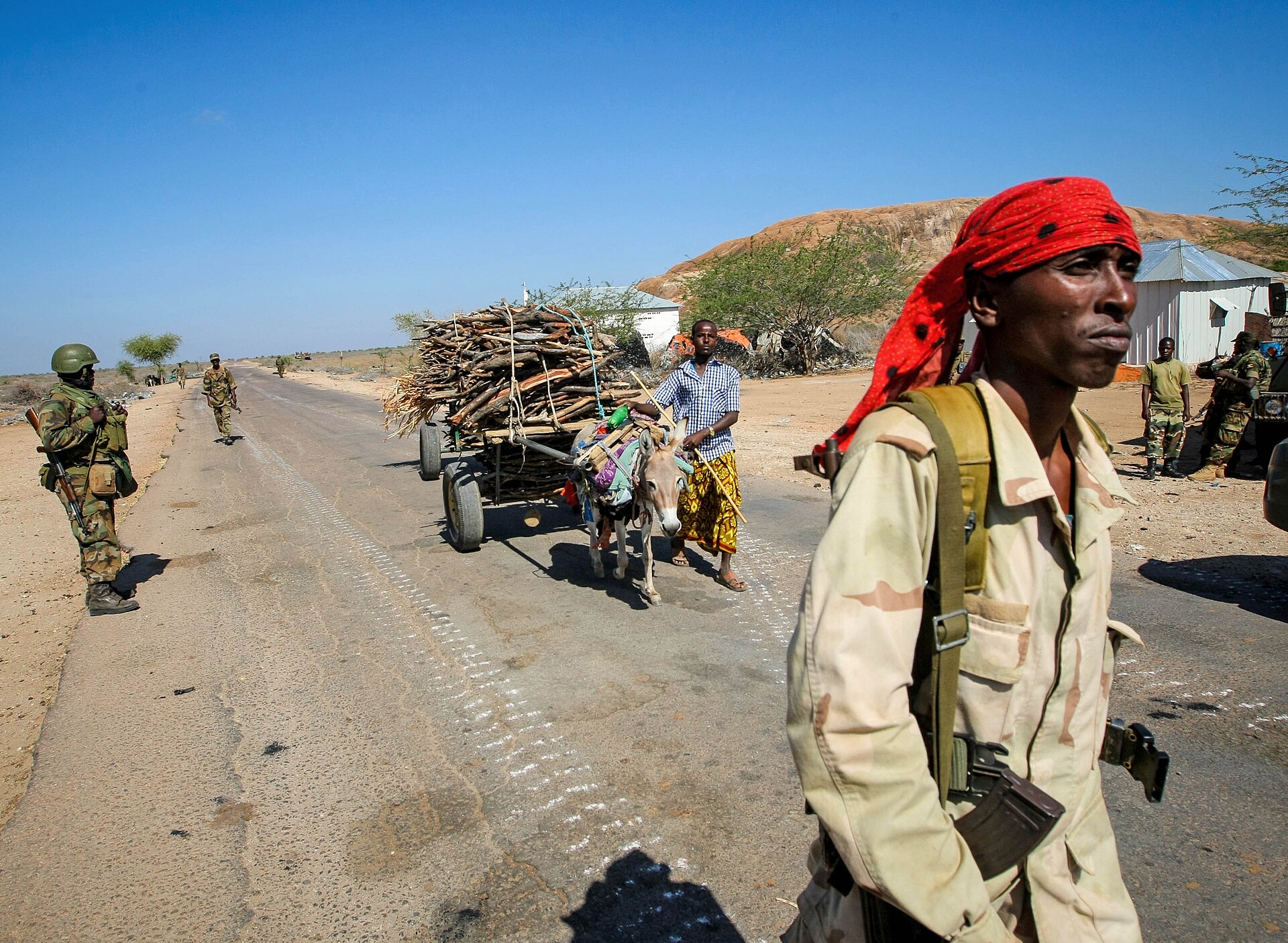

The numbers are disputed. The defence ministry says the army killed 75 militants and wounded 56. It says only that Al-Shabaab's car bombs damaged some military vehicles. Al-Shabaab says it killed 321 troops. The news agency AFP could verify neither. Soldiers interviewed by Reuters put the army's dead in the dozens and its wounded above 100, according to Kulu Media. In that account, one soldier said he helped carry 40 dead soldiers to hospitals in Mogadishu.
I want to ask a narrower question than who lost more. Why was this column on this road, with this plan and this cover? The army sent about 2,000 troops and more than 200 vehicles down a road where it had been ambushed two days earlier. The other half of its plan, a force advancing from Baidoa, had been ambushed and turned back hours before. And a source in Mogadishu told me the jets that could have covered the column took off only that evening.
The road
The army reached Leego on Saturday. Somali Guardian says it has faced ambushes and roadside bombs ever since. On Saturday itself, local media reported hours of fighting with casualties on both sides. The army said it killed seven militants, Somali Guardian reported. By Monday the troops were stranded in Leego, about 50 kilometres east of Burhakaba, amid fears of landmines and more ambushes. Militants held positions on the town's outskirts.
Then the column moved, as part of what the government calls Operation Banooda. The stretch between Leego and Burhakaba runs through Jameeca. The aim was to reopen the road linking Baidoa, Burhakaba and Mogadishu. Somali Guardian read the plan as a pincer: one force from Baidoa, one from Mogadishu via Leego, meeting in Burhakaba. The Baidoa half never arrived. It was ambushed early on Monday and, Somali Guardian reported, forced back with significant casualties. Laftagareen's forces claimed that attack. The Leego column was hit hours later. I could not establish whether the commanders at Leego knew the Baidoa force had been turned back when they gave the order to advance.
This was not the first time the army met an ambush on the road to Baidoa. In March, as federal forces advanced on the city, local media reported that Al-Shabaab ambushed army units on the Baidoa–Burhakaba road and forced them back from Daynuunay. The defence ministry said its troops took the town. In May, militants ambushed a convoy outside Baidoa and killed two senior commanders, General Ali Addow and Colonel Yonis, Somali Guardian reported. Ambushing columns on the move is a standing Al-Shabaab tactic, used to disrupt army movements, especially in Lower Shabelle, Bay and Bakool. In my analysis, it happens almost every time the army moves a large column between its positions there. This time, reports say Al-Shabaab had mined the whole road, and it struck with car bombs. I believe that is a group that was waiting, not one caught by surprise.
The road was not a secret. The defence ministry announced the operation on 24 October and put the first fight at Leego. Hiiraan reported troops moving along the Baledogle, Leego and Burhakaba corridor. South West State, the regional government based in Baidoa, had vowed ten days earlier to retake Burhakaba from forces loyal to its ousted leader. Al-Shabaab holds the edges of that corridor and needs no press release to see a column of more than 200 vehicles. But the government named its road, its objective and its first move in public. I do not claim Al-Shabaab used the announcement.
The group has other ways to know. In 2023 the government's own information minister said that people working in security agencies and government departments were passing information to the group. My interviews with more than 500 convicted Al-Shabaab members, and the military court cases I have reviewed, show the same: the group has its own people inside government departments. Many see only part of the picture, but I believe part is enough to tell the group where a column is heading and whether aircraft will cover it. What the announcement did was tell everyone else. The question is why a government moving 2,000 troops down one road told the public which road.
Security analyst Samira Gaid told AFP the army was hit by wave after wave of suicide attackers on a narrow road through muddy ground. She called the decision to send it through a known insurgent hotspot poorly planned. She added that the army was already facing severe salary cuts. The same AFP report notes that Washington has stopped funding the UN logistics mission that supplies combat operations in Somalia.
The sky
A source in Mogadishu told me he heard jets take off from the city's airport between about five and seven on Monday evening. He identified them as Turkish F-16s. Al-Shabaab says the ambush began on Monday afternoon. On that account the column was under fire for hours before the jets left the ground. I could not confirm the exact times. I also could not confirm whether the column had any air cover while it moved. People I spoke to say it had none. I found no statement from the ministry or Turkey on this.
In my analysis, the order of events is itself evidence. If strike aircraft had been in the air over the road, they would not have needed to take off from Mogadishu that evening. That they left only then points to a request made after the ambush began, not cover planned before the column moved. The government expected to need aircraft: security forces had told Leego residents to leave, warning of Turkish air strikes, Somali Guardian reported. The question is why no strike aircraft were in the air over the road when the column was hit. Turkish F-16s have flown from Mogadishu's airport since January. Turkish officials told AFP they are flown by Turkish personnel, not Somali pilots. Leego is about 120 kilometres from the capital. A jet covers that in minutes. If there was a delay, it was not about distance.
In my analysis, two things slow a strike like this. The first is approval. A request has to travel from Somali commanders to the Turkish officers who fly the aircraft, and I would expect that to take an hour or two. The second is identification. Once Al-Shabaab held captured army vehicles, as it says it did, pilots had to tell friend from enemy before firing, and that can take another hour. I found no official figure for either step. Baidoa Online, a local news site, reported, citing security sources, that Al-Shabaab captured some of the army's vehicles. People in Mogadishu told me more: that Al-Shabaab drove some of them into the bush, and that at least one, a Turkish-made armoured vehicle, was later hit from the air. I could not confirm that.
The timing is a second clue. Al-Shabaab mostly moves at night to avoid being seen from the air, a regional source told Middle East Eye in 2025. This attack began in daylight, by the group's own account. In my analysis, a group that hides from drones does not attack in the afternoon if it expects one overhead. I read it as a sign that Al-Shabaab did not expect aircraft over that road.
I believe Al-Shabaab knew this column would have no aircraft above it when it moved. What I know of how the group works, including its people inside government departments, points that way. I cannot prove what the group knew, but the facts fit. Both halves of the army's plan were ambushed within hours of each other. On Monday, Al-Shabaab used car bombs and, by its own account, captured vehicles. I do not claim air cover would have stopped the attack. Al-Shabaab hit the March advance on Baidoa, which had Turkish air power behind it. My claim is narrower. A column with strike aircraft overhead could have called for help while the fight was still going on.
The government has denied one thing. Its national security office says reports that Turkish F-16s or armed drones struck Somali troops at Leego on 26 October are false and misleading. As reported, the denial does not say when aircraft arrived or what they hit. Nor would this be the first time the government's account of Turkey's role changed. After the strikes at Godey, in Lower Shabelle, on 30 June, the defence ministry's first statement named Turkish F-16s. A later version spoke only of international partners, Al-Monitor reported.
What was lost
The ministry's own statement, issued Tuesday, gives no count of its dead, wounded or lost vehicles. It commends the troops' bravery and sacrifice. Garowe Online reported that 36 military vehicles were lost, including six Turkish-made Kirpi armoured vehicles, as FTL Somalia relayed. Horn Observer's own report says senior commanders were reported missing at Leego and that the casualty figures remain unclear. Al-Shabaab says it took prisoners, weapons and vehicles. It released images it says show captured armoured personnel carriers and the bodies of soldiers, according to Somali Guardian. I have not been able to verify them.
Which units were in the column is also unclear. Al-Shabaab says its targets included Turkish-trained troops. One analyst on X wrote that the US-trained Danab commandos appeared to have been hit hard. The ministry's statement names none. People I spoke to in Somalia describe the same outline as the public reports. They say the army lost dozens of soldiers, many more were wounded and Al-Shabaab captured vehicles.
Two opponents
The army was not only facing Al-Shabaab. Forces loyal to Abdiaziz Laftagareen, the former South West State president, took Qansahdhere, Burhakaba and Berdale this month, Hiiraan reported. His camp announced the capture of Burhakaba on 15 October. Burhakaba was where the column was heading. The government says Laftagareen's fighters work alongside Al-Shabaab. On 13 October it froze the assets of Laftagareen and nine others over suspected financial support for the group. It has not published its evidence. Laftagareen and his allies deny the charge. They say the government uses counterterrorism language against a political opponent.
Laftagareen turns the accusation around. He alleges that federal forces received support from Al-Shabaab and from Turkish F-16s. He offered no verifiable evidence, and neither the government nor Turkey has confirmed the F-16 claim, Hiiraan reported. I found no independent evidence that the two forces coordinated on 26 October. A Somali journalist told me a government intelligence document sets out the case in detail. I have not seen it and cannot say what it contains.
Whatever the truth about cooperation, the army was planning against two armed opponents on one road. The Baidoa half of its plan met Laftagareen's forces. The Leego half met Al-Shabaab. I found no explanation from the government of how it planned for both.
What the government owes
The ministry says Operation Banooda will continue. Before it does, three questions need answers. Who ordered the column to advance on Jameeca, and did that commander know the Baidoa force had already been turned back? What air cover was planned for 2,000 soldiers on a road already known to be dangerous, and when did the first request for aircraft go out? And what did the jets my source heard leave Mogadishu that evening hit?
The families of the dead and the missing commanders are owed a number from their own government. At the moment the only figures for the army's dead come from Al-Shabaab and from individual soldiers, and nobody can check them. The ministry has given counts only for the militants it says it killed.
I could not independently confirm the casualty figures, the timing of the ambush, the movements of aircraft or what Al-Shabaab knew in advance. People I spoke to for this piece asked not to be named for their safety.

- Popular
- Rated
- Commented


04/11/2021 - 11:05:02


28/05/2024 - 15:44:10


18/08/2025 - 17:22:07

01/03/2021 - 09:00:37



Opinions
13/10/2026 - 15:21:04
16/09/2026 - 16:11:57
Politics
06/10/2026 - 18:48:48
06/10/2026 - 15:14:30
Terror Watch
27/10/2026 - 22:28:43
26/10/2026 - 10:49:31
06/10/2026 - 21:41:19
Press Releases

12/10/2026 - 13:44:28




The Road They Already Knew: How Somalia's Army Lost a Convoy at Jameeca
After the ambush near Jameeca, Somalia's government called an emergency cabinet meeting. Local media said it was to discuss heavy casualties and equipment losses. Dozens of army vehicles were seen pulling back toward Baledogle airbase, which Som