

South Sudan Faces Worst Aid Shortfall Since 2011 as Hunger Deepens, Oxfam Warns
 0
0 - Visits: 3335
-

- Share
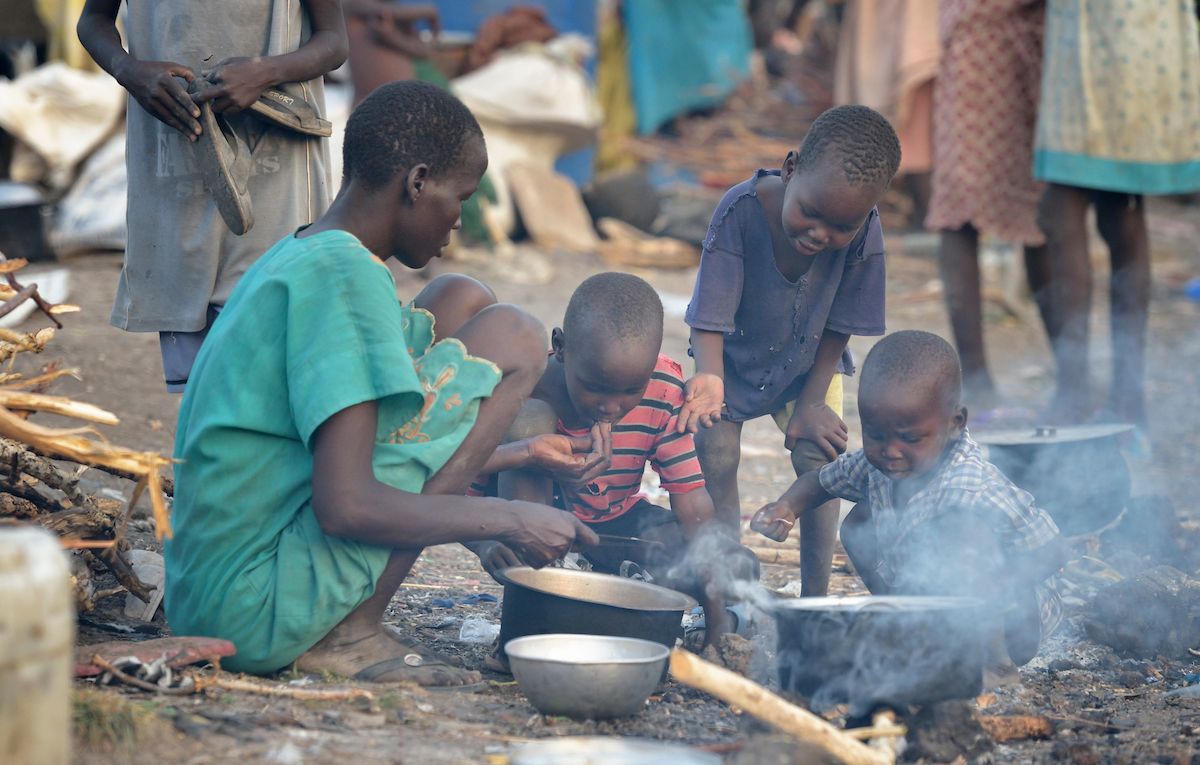

According to theorganization, almost 6 million people are suffering from acute food insecurity, while more than 2 million remain displaced within the country due to conflict and widespread flooding. An additional 1 million people have crossed the border fleeing the war in neighboring Sudan, placing further strain on already overstretched services.
Despite escalating needs, South Sudan’s $1.7 billion Humanitarian Need and Response Plan for 2025 is currently less than 41% funded, with only one month left in the year. Oxfam says the dramatic shortfall has forced aid agencies to scale back at a time when services are "needed the most.”
One of the hardest-hit areas is Renk, a crowded border town receiving up to 1,000 new arrivals daily. Oxfam announced it will cut its operations there by 70%within the next month due to lack of funding, warning that it may be forced to close entirely by February unless new support is secured.
"These aid cuts are catastrophic for the millions of people already grappling with extreme hunger and disease,” said Shabnam Baloch, Oxfam’s South Sudan Country Director. "It is as though the world is turning its back on those who need help the most, at the very moment when their survival hangs in the balance.”
Conditions in transit centers and local communities have sharply deteriorated. In one site, there is just one clean water tap for every 433 people, nearly half the minimum humanitarian standard. Health services are also under strain, with 35% of hospitals and clinics either closed or severely disrupted, while new cases of cholera, acute watery diarrhoea, and Hepatitis E continue to be reported.
A recent Integrated Food Security Phase Classification (IPC) report found that nearly 1.3 million people are already experiencing very high levels of acute malnutrition, with mortality rates rising. The assessment projects that the number of people in crisis could reach 7.5 million by April 2026 if trends continue.
Local residents say the reduction in aid is being felt daily. "Few organizations are now operating, unlike before when there were many,” said Maria, a returnee from Sudan currently living in Renk. "Now there is poor sanitation and hygiene, many water taps no longer work… We fear a worse situation where there is little or no water at all. Yet water is life.”
Oxfam also warned that the cuts are heightening protection risks, especially for women and girls, who may be forced into dangerous coping strategies such as early marriage or collecting firewood in unsafe areas.
The organization urged international donors to step up support, warning that millions of people could face starvation or a rapid spread of disease if emergency funding is not restored.

- Popular
- Rated
- Commented


04/11/2021 - 11:05:02


28/05/2024 - 15:44:10


18/08/2025 - 17:22:07

01/03/2021 - 09:00:37



Opinions

16/09/2026 - 16:11:57
15/09/2026 - 16:56:43
Politics
06/10/2026 - 18:48:48
06/10/2026 - 15:14:30

02/10/2026 - 17:35:54
Terror Watch
06/10/2026 - 21:41:19
06/10/2026 - 21:03:29
29/09/2026 - 14:38:38
Press Releases

12/10/2026 - 13:44:28
05/10/2026 - 19:10:20




South Sudan Faces Worst Aid Shortfall Since 2011 as Hunger Deepens, Oxfam Warns
Juba, South Sudan (Horn Observer) South Sudan is confronting its lowest level of humanitarian funding since the country's creation in 2011, leaving nearly half of its population facing acute hunger and limited access to clean water and basic he