

Somalia's Four-Year Cycle: Why Momentum Fades and What It Will Take to Break It
 0
0 - Visits: 12577
-

- Share

The entry of a new leader is always marked by a sense of freshness and palpable hope. There’s visible action marked by new security pushes, anti-corruption vows, cabinet reshuffles, and a burst of diplomacy. However, the second half of the term drifts into paralysis. Energy goes into coalition management, fights with regional leaders, and positioning for the next contest. Progress slows, day by day, until the country is back to arguing about the same unresolved questions.
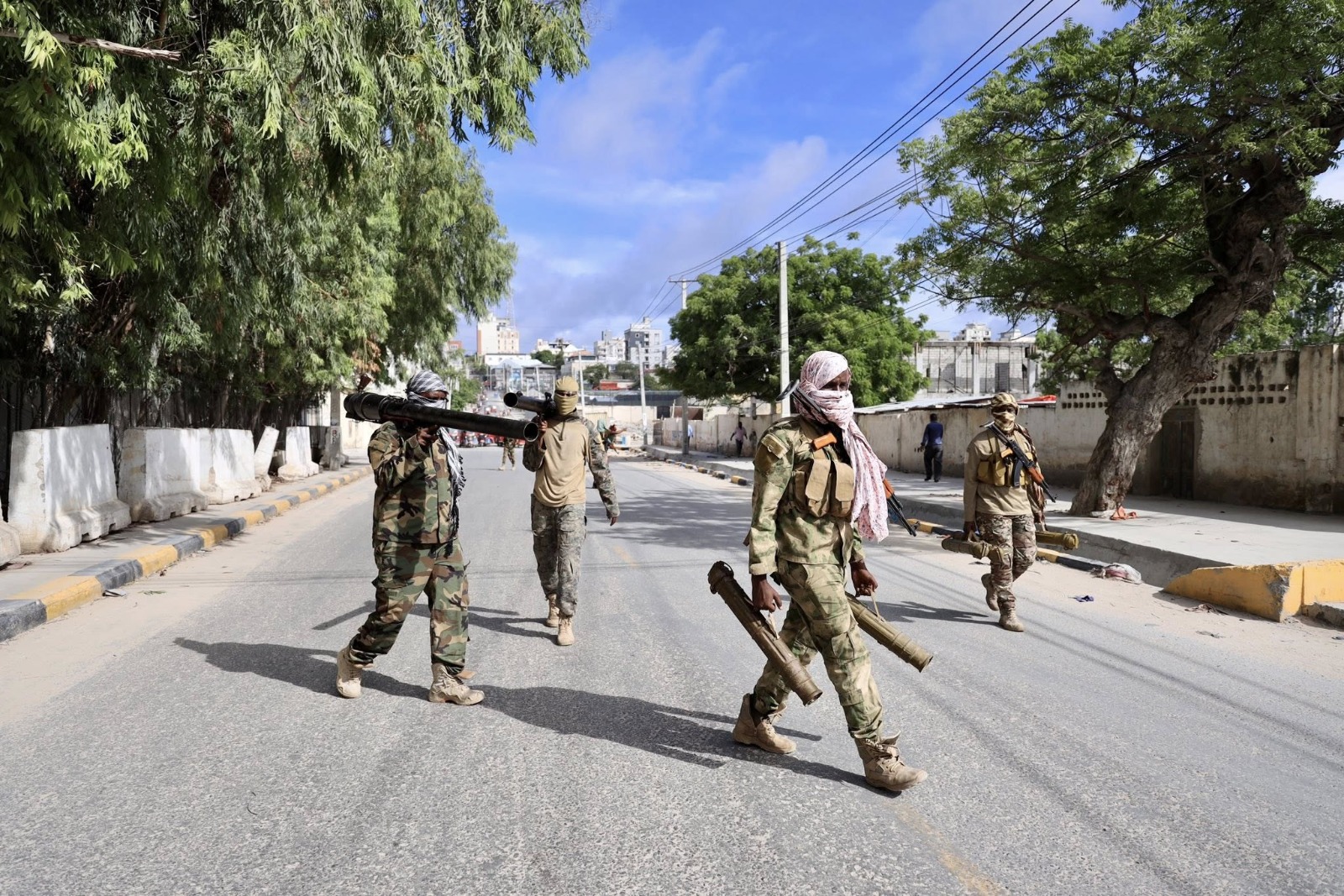
You can see the cycle clearly in security. The federal government’s offensive against Al-Shabaab that began in mid-2022 produced early gains, backed by clan mobilization and outside partners. President Hassan Sheikh Mohamud pitched tent in Dhusamareb in Galmudug state where he coordinated an unprecedented war against Al-Shabaab injecting a new energy and strategy in a war that had been running for years with little results to show. Occasionally, the President was seen in pictures spotting unkempt hair and arm bandage drawing public sympathy and praise for his commitment to the war.
By early 2024, however, analysts noted the campaign had stalled in central regions, with logistics, coordination, and political frictions blunting momentum. In early 2025, European asylum and country-of-origin reporting assessed that Al-Shabaab had reversed many of those gains and mounted renewed operations in Hiraan and Middle Shabelle wresting control of Adan Yabal, Awdhigle and later Bariire. A joint offensive of SNA and Ugandan forces has since reclaimed Bariire. During this period, the President had already shifted gear from the war against Al-Shabaab to a rather populist agenda- unilateral constitutional review process with an eye on his re-election in 2026.
Opposition behavior is the mirror image of the same pattern. Rather than competing on policies and then rallying behind national priorities, opposition figures often default to strategies that halt whatever the sitting president is doing. The logic is simple: deny the incumbent a record to run on. That dynamic was visible again this year as talks between Villa Somalia and opposition leaders stalled and each side dug in, with warnings of a widening political crisis. None of this is unique to one administration. It is a feature of a system that rewards short-term obstruction and punishes compromise.
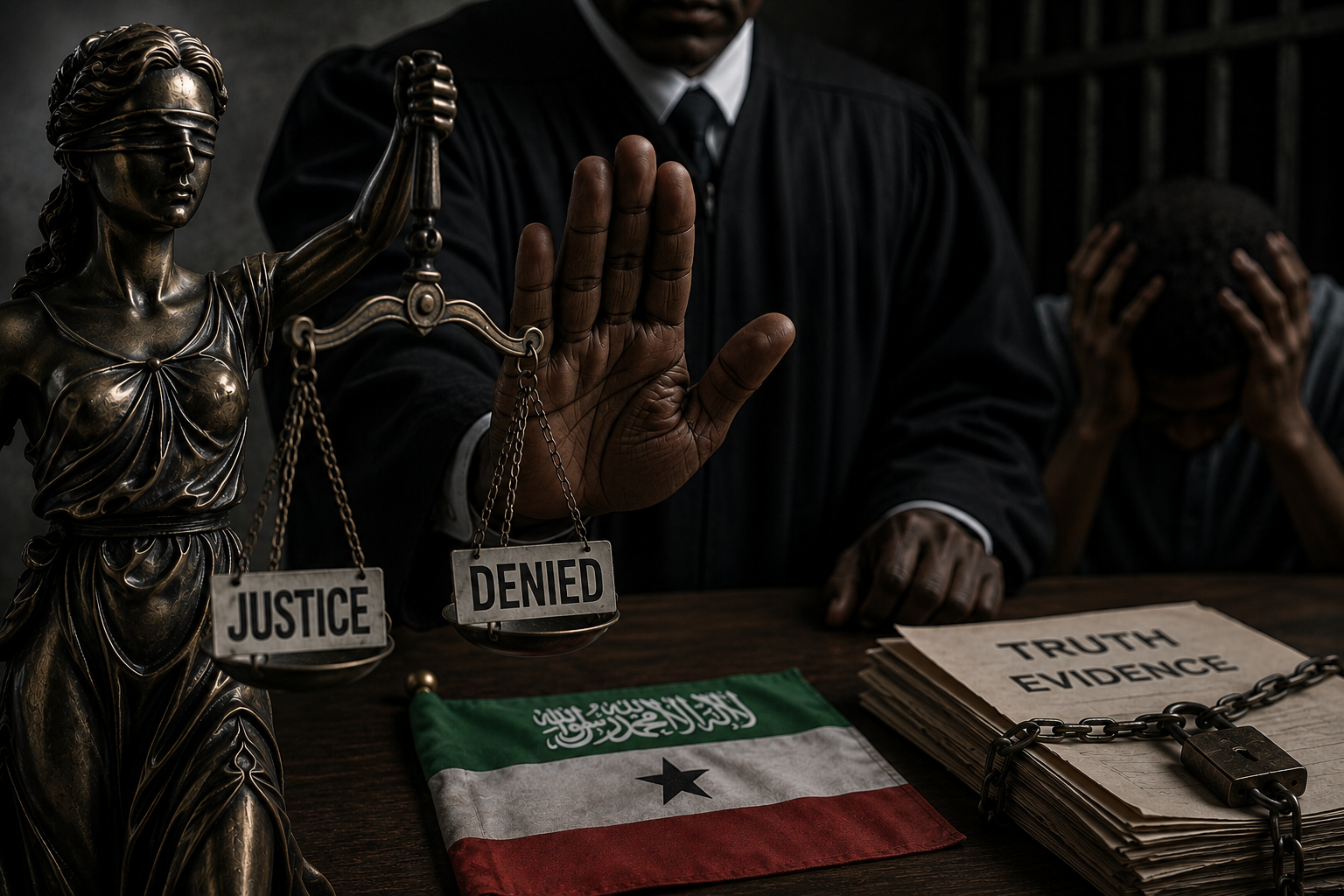
A core reason this cycle persists is the weakness of accountability institutions. Somalia’s justice sector is undergoing reform, but the baseline is low. A 2025 strategy launched with international support recognizes the need for accessible, fair, and accountable courts after years in which the formal system struggled to provide basic services. Independent research the same year highlighted persistent problems of judicial independence and public distrust, with formal courts seen as costly, politicized, and vulnerable to clan pressure. The Heritage Institute’s recent paper argues that without an independent judiciary, neither the executive nor the opposition faces meaningful checks. That vacuum incentivizes maximalism and zero-sum tactics.
The consequences are concrete. Looting and privatization of public land have spiked as Mogadishu undergoes a real estate boom. In recent days, two former presidents issued an unusually pointed statement condemning the misuse of public assets and forced evictions, urging the administration to halt unlawful seizures and protect vulnerable families. Somali media have also reported parliamentary and civil society complaints about collusion between officials and business interests in land deals. When accusations like these surface, the political class tends to treat them as ammunition rather than triggers for impartial investigation. Without a credible court process, allegations become talking points, and impunity hardens.
Security policy suffers too. The fight against Al-Shabaab is not only a military task. It is a political project that depends on steady funding, coherent command, and consistent partnerships. Early tactical wins can evaporate when stipends are interrupted, when logistics falter, or when external backers shift priorities. Recent reporting on aid and security support cuts warns that fragile units such as Danab have been strained, even as new partners step in with their own agendas and mixed results. In that environment, an opposition committed to national interests would spend political capital to keep the counterinsurgency on track. Too often, rivals treat security as another arena to embarrass the presidency, rather than a shared responsibility that rises above electioneering.
Capacity is the final pillar. Somalia’s government has taken on major transitions at once: federalism, constitutional completion, security sector reform, the AU mission drawdown, and a shift toward one-person-one-vote. A new commentary from the Heritage Institute argues that constitutional ambiguity keeps pulling politics back into procedural fights over term lengths, election models, and center-state powers. The result is a governance system that prioritizes tenure over delivery. On top of that, fiscal pressures are real. The health sector’s diphtheria crisis this past week underscored how donor cuts and thin domestic budgets translate directly into service failures that citizens feel. When the state struggles to vaccinate children, it is hard to sustain public confidence in larger reforms.
To break the cycle of stalled progress, Somalia needs to put certain priorities beyond political rivalry. Parliament and opposition blocs should commit to a handful of national goals that outlast any administration-such as prosecuting public land theft, safeguarding anti-corruption bodies, and securing the counter-Al-Shabaab budget. These commitments must be tied to transparent reporting and independent audits so that any breach carries real political costs.
Strengthening the justice system is equally crucial. Courts cannot be independent on paper alone; they need practical reforms. Publishing vacancies and criteria, ensuring predictable funding for salaries and training, and establishing a special chamber to handle corruption and public asset cases would be meaningful first steps. These reforms would allow courts to impose real accountability where politics has failed. On the security front, leaders must also separate national defense from electioneering. Parties should agree not to mobilize clan militias for political gain and work jointly to oversee the counterinsurgency effort, with external partners conditioning support on genuine cooperation.
Land management and reform sequencing should round out the agenda. Public land should be treated as a test case for accountability through an independent review of recent transfers, freezing dubious titles, and prosecuting illegal deals. At the same time, leaders must resize ambitions to the state’s actual capacity. Completing a narrow constitutional package that clarifies roles and electoral models would prevent endless debates and give government space to build credibility. Somalia’s challenge is not the energy of the first two years but the collapse that follows; lasting progress depends on a few enforceable guardrails, stronger courts, and keeping core national priorities above partisan battles.
---

- Popular
- Rated
- Commented


04/11/2021 - 11:05:02


28/05/2024 - 15:44:10


18/08/2025 - 17:22:07

01/03/2021 - 09:00:37



Opinions
08/07/2026 - 17:36:21

08/07/2026 - 17:23:46
09/06/2026 - 17:11:47
Politics

Terror Watch
06/04/2026 - 17:26:14
03/04/2026 - 20:41:52
Press Releases
12/07/2026 - 20:11:01



Somalia's Four-Year Cycle: Why Momentum Fades and What It Will Take to Break It
At the end of every four years in Somalia, there's a new occupant at the Villa Somalia although these timelines may at times be abused as a result of political intransigence necessitating extensions which run into months.