

Beyond Vulnerability: What Somalia's Climate Finance Gap Reveals About Global Priorities
 0
0 - Visits: 18827
-

- Share
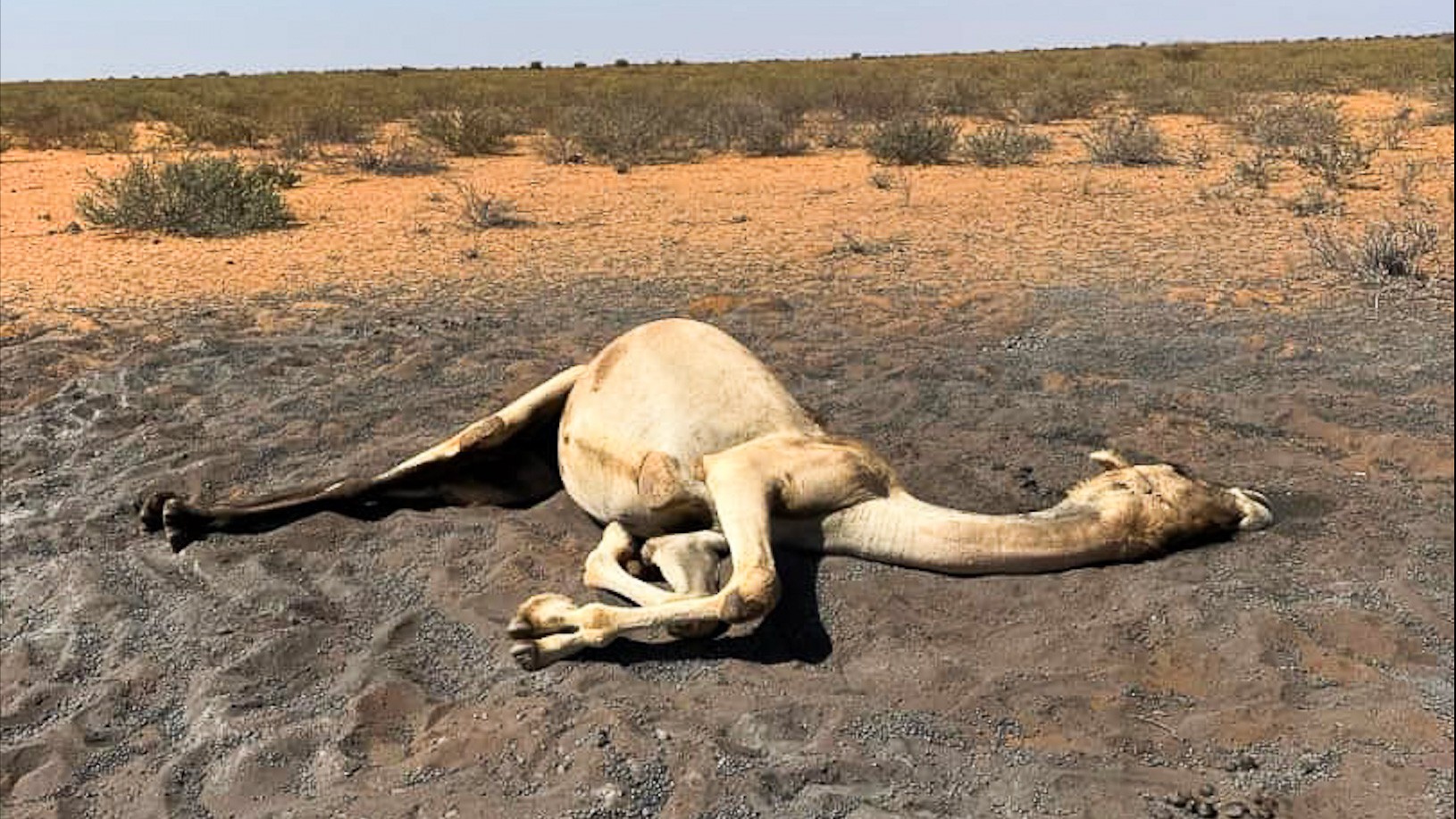

Yet there is a dimension of the climate question that remains largely underexamined within national debate: the political economy of climate finance.
Global climate finance has expanded rapidly over the past decade. According to the Climate Policy Initiative and related global assessments, annual flows now exceed $1.3 trillion, spanning public finance, multilateral lending, and private capital. However, as multiple African-focused studies have shown, the continent receives only a marginal share — in some estimates as low as 2–4 percent of total global climate finance.
Yet even within this already limited allocation, access remains deeply uneven with fragile and conflict-affected states sitting at the very margins. Comparative data vividly illustrates the depth of the disparity. A 2024 World Bank analysis shows that fragile and conflict-affected states receive approximately $0.44 per capita in adaptation finance, compared to $3.27 per capita in more stable developing countries—nearly an eightfold difference.
Somalia’s Climate Finance Reality
Somalia exemplifies this structural exclusion.
A 2023 Readiness Needs Assessment prepared under the Green Climate Fund (GCF) framework estimates that Somalia requires approximately $5 billion annually to address climate-related priorities, while current flows amount to roughly $300 million per year—indicating that only a small share of identified needs is being met. Moreover, the report also makes clear that these flows consist of broader climate-related development finance, much of which is channelled through international intermediaries. As such, they do not necessarily reflect resources directly accessible to, or controlled by, national institutions.
Last September, a climate finance assessment of the IGAD region commissioned by Oxfam inAfrica highlights that this gap is not incidental but structural. For countries like Somalia, access is constrained by systemic barriers, including complex application procedures, stringent fiduciary standards, and a risk-averse financing architecture that is poorly suited to fragile and conflict-affected contexts.
As a result, even where climate finance needs are clearly articulated, the institutional pathways required to convert those needs into actual financing remain limited. Somalia’s marginal presence in global climate finance, therefore, reflects not only external inequities, but also structural constraints within its own institutional configuration.
The Climate Finance System
Climate finance mechanisms are structured around specific requirements: bankable project pipelines, accredited implementing entities, fiduciary compliance systems, and monitoring, reporting and verification (MRV) frameworks. As the Green Climate Fund emphasises in its operational guidance, access to climate finance depends on the capacity of countries to develop programmes, meet fiduciary standards, and implement projects effectively. These requirements are necessary for managing large-scale finance, but they also function as entry barriers. Countries that cannot meet them are not explicitly excluded; they are structurally unable to participate.
Against that backdrop, climate finance operates less as a needs-based allocation system and more as a readiness-based system.
In contexts where these capabilities have been deliberately developed, climate finance has begun to scale. In contexts where they remain underdeveloped, global commitments often fail to translate into meaningful financial flows.
Somalia largely occupies the latter position. And, as we will see in the next section of this piece, it's not due to resource scarcity. It is, more fundamentally, a matter of institutional formation.
The Domestic Dimension
Climate-related responsibilities within Somalia are distributed across multiple ministries and agencies, embedded within a multi-layered institutional framework established under the National Climate Change Policy. However, Somalia’s own policy frameworks acknowledge significant constraints in how this system operates in practice. The National Climate Change Policy identifies "structural and systemic weaknesses” in the country’s institutional arrangements, including limited capacity and coordination challenges, while the National Adaptation Plan Framework similarly notes persistent gaps in policy, institutional, and financial capacity.
Technical expertise in areas such as climate finance modelling, project preparation, and monitoring, reporting, and verification (MRV) remains uneven, and policy processes are frequently supported through external consultancy—often necessary, but limiting the development of sustained internal capability and institutional memory.
The result is a structural imbalance: high exposure to climate risk, coupled with low readiness to access and manage climate finance.
From Vulnerability to Agency
This imbalance carries important implications. It means that Somalia engages with the global climate system primarily as a site of impact, rather than as an actor capable of structuring its own response, shaping financial flows, or influencing negotiation outcomes.
Addressing this condition requires more than incremental reform. It requires a conceptual shift.
Climate change must be understood not only as an environmental or humanitarian issue, but as a domain of economic strategy, public finance, and institutional design. It sits at the intersection of governance systems, data infrastructures, investment planning, and international negotiation. Responding to it therefore demands a corresponding reconfiguration of state capability.
This reconfiguration can be understood along three interrelated dimensions.
First, the development of a coherent national architecture for climate governance — one that clarifies institutional roles, strengthens coordination across ministries, and integrates climate priorities into broader economic planning frameworks.
Second, the systematic cultivation of technical expertise. This involves training individuals who can operate across disciplines: economists capable of modelling climate investments, policymakers who can structure finance proposals, and analysts who can engage with complex reporting and verification systems.
Third, the gradual internalization of functions that are currently externalized. While international expertise will continue to play an important role, long-term effectiveness depends on the ability of national institutions to generate, manage, and retain their own analytical and technical capacity.
These are not short-term reforms. They are elements of state-building within a rapidly evolving global domain.
The broader context, however, is shifting. The global climate regime is entering a period of intensification, with increasing emphasis on adaptation finance, loss and damage, and equitable access. African countries, collectively, are beginning to articulate more coordinated positions within international negotiations. There is, in this sense, an emerging window of opportunity.
But it is a window that favors those who are institutionally prepared.
For Somalia, the central question is no longer whether climate finance will expand globally. It almost certainly will. The more consequential question is whether Somalia will remain at the margins of this system, or whether it will begin to engage with it on strategic terms.
This ultimately depends on how the problem itself is framed.
If climate change continues to be understood primarily through a humanitarian lens, the response will remain correspondingly limited. If it is recognized as a challenge of institutional capability, economic strategy, and state coordination, a different set of policy priorities becomes possible.
The future distribution of climate finance will not be determined by vulnerability alone. As Nicholas Stern, author of the influential Stern Review on the Economics of Climate Change, has argued, the central challenge is not only the volume of finance available, but how effectively it is accessed and deployed. What matters, therefore, is not only the scale of need, but the capacity to organise, to articulate, and to engage with a global system that increasingly rewards preparedness.
For Somalia, this means that the challenge is not only to endure climate change, but to move from a position of exposure to one of agency—to develop the institutional capability required not simply to receive climate finance, but to access it on strategic terms.
About the Author:
Jaffar Jimale is the Executive Director of Green Finance and Climate Strategy Institute (GFCSI). He can be reached at [email protected]

- Popular
- Rated
- Commented


04/11/2021 - 11:05:02


28/05/2024 - 15:44:10


18/08/2025 - 17:22:07

01/03/2021 - 09:00:37



Opinions

16/09/2026 - 16:11:57
15/09/2026 - 16:56:43
Politics
06/10/2026 - 18:48:48

06/10/2026 - 15:14:30
02/10/2026 - 17:35:54
Terror Watch
06/10/2026 - 21:41:19

06/10/2026 - 21:03:29
29/09/2026 - 14:38:38
Press Releases

12/10/2026 - 13:44:28
05/10/2026 - 19:10:20




Beyond Vulnerability: What Somalia's Climate Finance Gap Reveals About Global Priorities
In recent years, climate change has come to occupy a central place in Somalia's public and policy discourse. It is invoked to explain drought cycles, displacement, food insecurity, and the increasing fragility of rural livelihoods. These associa