

Demolitions Public Land and the Test of Law - In Somalia's capital Mogadishu power has strong muscles intended to destroy most vulnerable
 0
- Visits: 122
-

- Share

Somalia's government says it is recovering public property and transforming an unplanned capital but the question is: is it the right time to displace vulnerable families while government don’t have resources to accumulate them? Is it or was it urgent to evacuate vulnerable families with no access to basic needs?
Behind the dispute lies a broken registration system and a fundamental question: who decides ownership, and under what law, is it inline with Somali constitution, IGAD law and International law
Reporters met residents of Mogadishu whose homes had been demolished Some said they had been told to pay thousands of dollars which they cant afford or leave. Others displayed documents issued or recognized by government authorities.
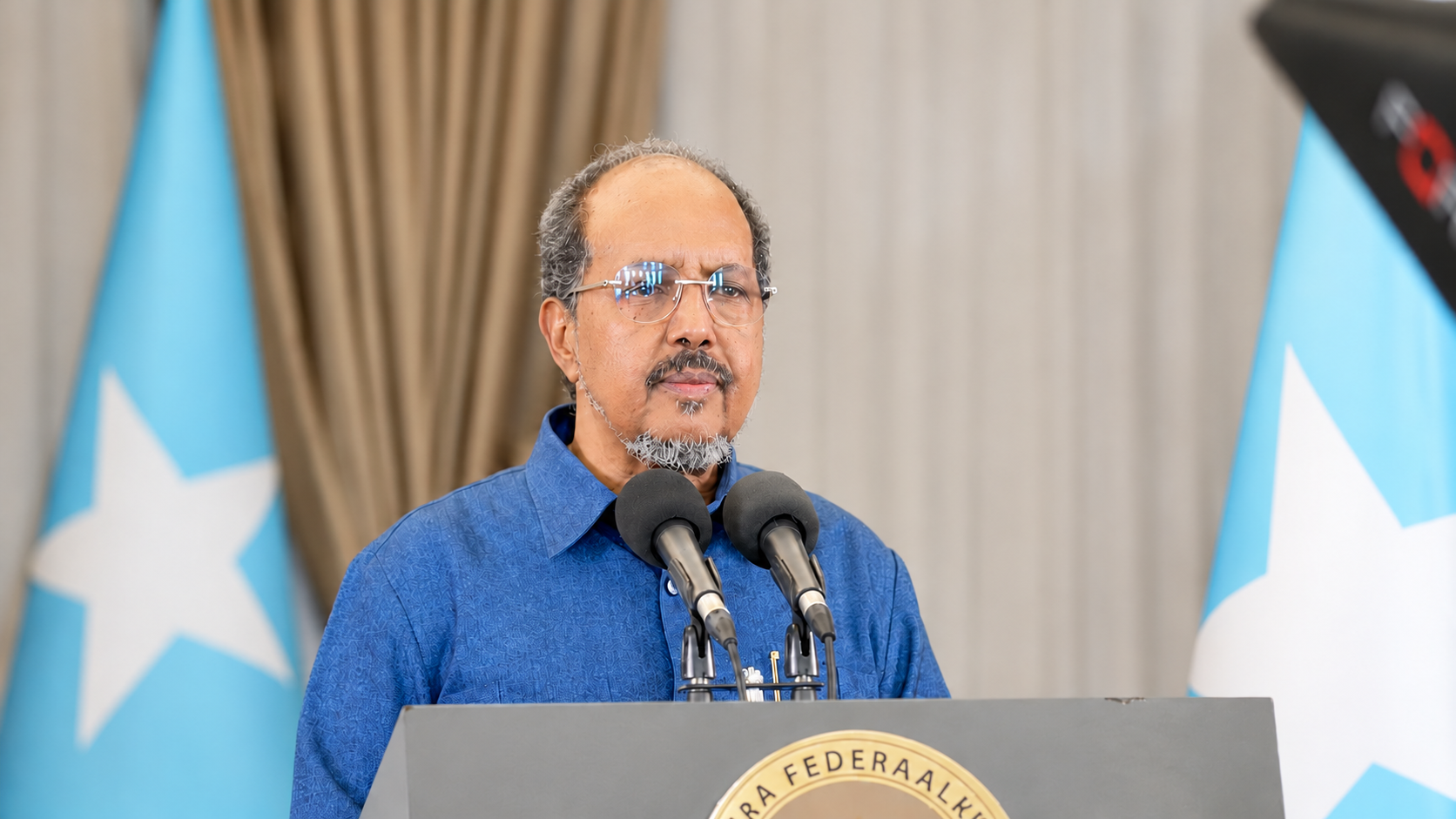
The government offered a different explanation. The land was public property, officials said, and had to be recovered. President Hassan Sheikh Mohamud argued that Mogadishu could no longer remain a congested and unplanned city in which ambulances, fire engines and security forces could not reach some neighborhoods. I believe President Hassan Sheikh Mohamud would revisit his comment and weigh between his comments and displacing vulnerable families who don’t have access to basic needs and their constitutional rights. Congested location was fully accessible
A growing eviction crisis
Demolitions and forced evictions are creating public outcry include vulnerable mothers crying in public . The European Union Agency for Asylum, drawing largely on Norwegian Refugee Council data, reports that more than 100,000 people were evicted in Mogadishu in 2023. The figure was 68,880 in 2024 and approximately 149,000 in 2025. and another 84,874 people recorded in early January and in April 2026.
The EU agency says more than 63,000 of the people evicted in 2025 were removed from government properties. It also recorded a sharp increase in protests connected to land evictions. Some government-led operations were accompanied by arrests, injuries and deaths.
The burden falls heavily on people already living at the edge of survival. More than 1.1 million internally displaced people were estimated to be living in the Banadir region by June 2026, according to UNHCR data. Many had previously fled drought, flooding, conflict or al-Shabaab-controlled areas. Most of evicted families move to insecure plots and face possibility of being evicted again
The Norwegian Refugee Council found that 87 per cent of displaced people in Mogadishu lacked clear tenure arrangements. Its research also documented physical assaults, destruction of property and deaths during some eviction operations.
Not every evictee has the same claim
It would be misleading to treat everyone affected by the demolitions as belonging to one legal category.
Some families acknowledge living on land associated with ministries, military facilities or other public institutions. Some are displaced people occupying informal settlements under weak or unwritten agreements. Others say the government itself regularized their occupation.
These distinctions matter. A lawful owner, an innocent purchaser, a tenant and an informal occupant do not necessarily have equal claims to the land. But all retain basic rights when the state decides to remove them.
The collapse of the Somali state in 1991 destroyed or scattered public records. Families fleeing the fighting abandoned homes and documents. Properties were occupied, transferred and sold, sometimes repeatedly. As members of the diaspora returned, they found other families living on land.
Somali civil war, the conflicts and poor governance systems after 1991 made the land management system very broken . Multiple deeds can now exist for the same parcel, while some historical records have reportedly remained in private hands outside Somalia.Therefore possession and ownership of the lands require evidence and an impartial process capable of testing it.
Reclamation or private enrichment
Opposition politicians, including three former presidents, have accused the Hassan Shiikh Mahamuud administration of clearing public land and transferring some of it to politically connected private developers or business men. More than 90 members of Parliament have also reportedly raised concerns about public-property transactions. This coupled with lack of government public announcements that remain in back rooms while keep demolishing both public and private lands .The accusations are serious but claims must remain more clearly attributed allegations.
Nevertheless, the allegations raise legitimate questions. The Heritage Institute has called for the publication of recent land transactions and the suspension of disputed deals.
For every reclaimed parcel, the government should be able to answer simple questions: What was the land's historical status? Which institution owned it? Who authorised its clearance? What public purpose will it serve? If it was sold or leased, how was it valued, who received it, and where were the proceeds recorded?
What the Constitution says
Somalia's constitutional position changed in March 2026, when Parliament approved and President Mohamud signed a new federal constitution. The federal government treats it as the country's permanent supreme law, although Puntland, Jubaland and opposition groups continue to dispute the constitutional process.
Article 24 recognises the right to an adequate standard of living, including housing, food, clean water and healthcare. Article 25 protects the right to own, use, enjoy, sell and inherit property.
The state may compulsorily acquire property only for a public interest. When it does, the affected owner is entitled to fair compensation agreed by the parties or determined by a court.
Article 43 requires land to be held, used and managed equitably, efficiently, productively and sustainably. It also calls for a national land policy that protects ownership and registration.
If the government proves that a parcel is public property and that its occupants have no ownership rights, recovering it may not constitute compulsory acquisition of their land. But the occupants must still receive due process and humane treatment as well relocations
If residents establish that the property is legally theirs, the government must show a genuine public interest and provide just compensation. Taking private land for a road, hospital or school could satisfy that test. Taking it under that justification and subsequently transferring it for an unrelated private development would raise much more difficult constitutional questions.
Old laws in a changed city
The principal national statute is still the Urban Land Distribution Law of 1973, adopted under Mohamed Siad Barre's military government. It distinguishes between public-domain property and the state's private domain.
Roads, airports, ports, cemeteries and certain properties intended for public services fall within the public domain. The law says public-domain and municipal property cannot be sold commercially or transferred to other parties. It also permits land required for national purposes to be repossessed with compensation.
These laws are outdated and contain concepts inherited from a very different system of government. Yet they have not been replaced by a complete modern framework. Somalia therefore has laws governing land, but not a coherent and dependable land-governance system.
Ownership is not the only legal question
Even when an occupant cannot prove ownership, the government does not acquire an unlimited right to evict without notice or remedy.
Somalia acceded to the International Covenant on Economic, Social and Cultural Rights in 1990. It also ratified the African Union's Kampala Convention on internal displacement and adopted National Eviction Guidelines in 2019.
International standards require genuine consultation, adequate notice, information about the legal basis and intended use of the land, access to legal remedies, proportionate use of force and protection against homelessness. Where people cannot provide for themselves, appropriate relocation or access to alternative land are required.
The government's answer that residents with valid documents can go to court is therefore incomplete. Courts should determine disputed ownership, but a remedy becomes far less meaningful if the home has already been destroyed.
Somalia's Constitution protects access to court and procedurally fair administrative decisions. In principle, affected residents can challenge an eviction, seek an order suspending demolition and claim compensation. In practice, poor families face legal costs, delay, corruption concerns and difficulty enforcing judgments. The country's incomplete judicial reforms further weaken public confidence.
Due process must come before demolition, not after it.
A way forward
Mogadishu cannot resolve its land crisis through blanket regularisation, which could reward fraudulent acquisitions and deprive the public of essential property. Blanket demolition is equally indefensible: it treats government claims as conclusive, punishes innocent purchasers alongside unlawful occupiers and risks creating thousands of newly displaced families
The government should publish a map and inventory of every property it intends to recover, together with its historical used, ocumentary basis and intended use . Demolitions should be suspended where residents present credible competing evidence until an independent body has examined the claims.
Writer: Abdirahman Yusuf li, Social and Peace activist at Uistaag Dadka iyo Dalka, former youth development advisor at Federal Ministry of Youth and Sports and Federal member states

- Popular
- Rated
- Commented


04/11/2021 - 11:05:02


28/05/2024 - 15:44:10


18/08/2025 - 17:22:07

01/03/2021 - 09:00:37



Opinions
13/11/2026 - 18:05:57
13/10/2026 - 15:21:04
Politics
18/11/2026 - 12:40:58
29/10/2026 - 21:44:21

Terror Watch
29/10/2026 - 18:42:36

27/10/2026 - 22:28:43
Press Releases
13/11/2026 - 18:24:36





Demolitions Public Land and the Test of Law - In Somalia's capital Mogadishu power has strong muscles intended to destroy most vulnerable
Residents say homes and inherited land are being taken without due process, Yes resident and vulnerable families has the rights to have due process, consultations, clear legal announcement and relocations as well they have right to know government pl