

What EACJ Oversight of Somalia's State Conduct Could Mean for Governance, Rights, and Political Power
 0
0 - Visits: 7806
-

- Share
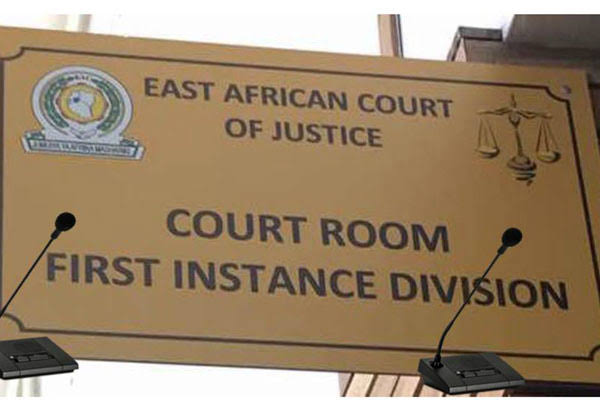

Membership in the Community does more than open access to regional markets and institutions; it imposes binding obligations rooted in a normative framework that is interpreted, applied, and occasionally enforced by the East African Court of Justice (EACJ, "the Court”)). That framework is defined by the text of the EAC Treaty and a steadily expanding body of jurisprudence. Together, they now constitute a new layer of governance that Somalia must internalize. Only days after the Court enjoined a slate of Somali candidates from being sworn into the East African Legislative Assembly (EALA), another Somali lawmaker publicly announced his intention to file a case alleging political retaliation, obstruction of parliamentary work, and corruption by senior Somali officials. These back-to-back developments offer a timely opportunity to clarify how the Court actually functions. Whether this new threatened petition survives the procedural demands of the Treaty is uncertain, but it highlights a new and unavoidable reality for Somalia: domestic political authority is no longer insulated from regional legal scrutiny. What follows is not a defence of his claims, nor an endorsement of his tactics, but a reflection on the system into which Somalia has stepped.
The Court’s authority is shaped by three forces: the substantive obligations in the Treaty, the jurisdictional limits of the Court, and the broader philosophy behind regional integration. Together, they form a structure that is modest in its remedies yet profound in its implications. Understanding how these elements operate helps explain why Somalia is now more exposed to external legal accountability than at any point since independence.
I. The substantive Obligations in the Treaty That Bind Somalia
The core obligations that now bind Somalia appear in Articles 6(d), 7(2), and 8(1)(c) of the EAC Treaty. Together, they define the political and governance standards of the community Somalia has joined. Article 6(d) commits Partner States to "good governance including adherence to the principles of democracy, the rule of law, accountability, transparency, social justice, equal opportunities, gender equality, as well as the recognition, promotion and protection of human and peoples’ rights in accordance with the African Charter on Human and Peoples’ Rights.” Article 7(2) reinforces these duties by requiring States to "abide by internationally accepted principles of good governance, including adherence to the principles of democracy, the rule of law, accountability, transparency and social justice,” making these norms enforceable benchmarks rather than aspirational ideals. The Court has treated these provisions as binding legal standards, most clearly in Plaxeda Rugumba v Secretary General of the EAC & Attorney General of Rwanda (Ref. 8/2010). In that case, the Court held that Rwanda’s incommunicado detention of the applicant’s brother without charge breached Articles 6(d) and 7(2), rejecting the argument that human-rights concerns fell outside its mandate. By holding that Rwanda’s five-month incommunicado detention of Lt. Col. Ngabo—without charge or court production—was inconsistent with Articles 6(d), 7(2) and 8(1)(c), the Court confirmed that Partner States’ undertakings on democracy, rule of law, accountability, and human rights in the EAC Treaty are justiciable obligations, not purely domestic political commitments.
In IMLU v Attorney General of Kenya (Ref. 3/2010),[4] the Court’s First Instance Division accepted that allegations of torture, extrajudicial killings, disappearances, and state failure to investigate or punish those responsible could — if proved — constitute violations of the rule-of-law, accountability, and good-governance obligations entrenched in Articles 6(d) and 7(2) of the Treaty. However, on appeal the Court struck out the reference as time-barred under Article 30(2), rejecting the concept of a continuing violation as a basis to extend the limitation period. The Court thus avoided a merits determination, but did not dispute that such conduct, if established, falls within the Treaty’s enforceable obligations.
Article 8(1)(c) imposes a binding obligation on Partner States to refrain from any measure that would jeopardise the Community’s objectives or frustrate implementation of the Treaty. In Media Council of Tanzania v Attorney General of Tanzania (Ref. 2 of 2017), the EACJ confirmed that this obligation is judicially enforceable: the Court held that provisions of Tanzania’s Media Services Act violated Articles 6(d), 7(2), and 8(1)(c) because they undermined the rule of law, accountability, and democratic governance principles that the Treaty requires Partner States to uphold.
The obligations under Articles 6(d), 7(2), and 8(1)(c), taken together, represent a compact that Somalia has joined. They interact with domestic governance in a direct way. If Somali institutions, whether through action or inaction, engage in political retaliation, undermine parliamentary oversight, or block accountability in a manner that engages principles of democratic governance, then the EACJ has the authority to examine the conduct. But that does not mean it will decide the case. Jurisdictional discipline is the second force at play.
II. The Jurisdictional Gateways That Control Access to the Court
The rights in Articles 6, 7, and 8 do not float freely. They must be brought into the Court through strict procedural gates. The most important are Articles 23, 27, and 30(2) of the Treaty. Article 23 states that the Court shall "ensure the adherence to law in the interpretation and application of and compliance with this Treaty.” This sets the role of the Court but says nothing about who may approach it or when. Article 27(1) provides the Court with jurisdiction "over the interpretation and application of this Treaty.” The Court cannot hear criminal appeals, constitutional challenges, or purely political grievances. It hears only claims that a Partner State has violated an obligation under the Treaty. This is why an applicant who alleges political persecution, salary suspension, or harassment must frame those facts as breaches of Articles 6(d), 7(2), or 8(1)(c).
In Emmanuel Mwakisha Mjawasi & 748 Others v Attorney General of Kenya (Ref. 2 of 2010), the Court again underscored the limits of its mandate, emphasising that it is not a regional human-rights compensation body but a court of Treaty interpretation under Article 27(1). The applicants—former employees of the defunct East African Community—alleged that Kenya’s prolonged failure to pay their pension and terminal benefits breached Articles 6(d) and 7(2). While reaffirming that it ‘may not adjudicate human-rights violations per se’ absent the protocol envisaged by Article 27(2), the Court accepted jurisdiction because the reference was properly framed as a violation of Treaty-based governance obligations rather than as a direct human-rights claim. The ruling reflects the Court’s consistent position: applicants may rely on Articles 6(d) and 7(2) to challenge state conduct that undermines rule-of-law and accountability commitments, but the EACJ will not transform itself into a human-rights tribunal.
The most formidable jurisdictional gateway, however, is Article 30(2), the time-limit for filing references, "The proceedings provided for in this Article shall be instituted within two months of the date on which the act complained of occurred, or on the day it came to the knowledge of the complainant.” This deadline operates as a statute of limitations, and the EACJ applies it without flexibility. On numerous cases, the Court stressed that the two-month period is strict and cannot be extended by describing an older violation as "continuing.” The Court held that attempting to recast time-barred acts as ongoing violations did not revive jurisdiction. This means that any Somali applicant approaching the EACJ must be meticulous about timing. If an MP’s salary was suspended eight months earlier, the claim is presumptively out of time. If parliamentary communication tools were revoked in May and the application is filed in November, the Court is unlikely to accept it unless the applicant can show a new, independent act occurred within two months. Article 30(2) shapes outcomes more than the strength of the grievance.
It is also important to note that the Court hears cases against Partner States, not individuals. Listing the President, Speaker, ministers, or Central Bank officials as respondents exceeds the Court’s authority. The proper respondent is "The Attorney General of Somalia.” This requirement reflects the nature of the Treaty: only states bear the obligations it enshrines. Although the EACJ has not dismissed references solely because a party was mis-named, errors in identifying the correct respondent can still be consequential. Because the Court applies Article 30(2)’s two-month filing deadline strictly, a defective reference that must be withdrawn and re-filed risks falling outside the limitation period. Taken together, these jurisdictional rules illustrate why the threatened Somali case is unlikely to succeed unless reframed. They also explain why the Court is not an all-purpose tribunal for domestic political disputes. Yet within these limits lies a power that can influence governance when exercised well.
III. The Remedies the Court Is Willing to Grant
The EACJ does not use the tools of a constitutional court or a human-rights tribunal. It does not award damages except in exceptional circumstances, and it does not issue punitive orders. Its remedies are deliberate in their modesty.
In Rugumba, the Court issued a declaratory judgment holding that Rwanda had violated Articles 6(d) and 7(2), but it declined to award compensation, explaining that its jurisdiction under Article 27(1) does not extend to monetary remedies. A similar position emerged in IMLU, where the Court stressed that it is a court of Treaty interpretation rather than a regional human-rights compensation tribunal. Although the First Instance Division accepted that the allegations could breach Articles 6(d) and 7(2), it rejected damages as a remedy, and the Appellate Division later struck out the case as time-barred. The jurisprudence confirms that while the EACJ may declare Treaty violations, it does not issue financial awards for human-rights-inflected claims.
However, the Court has the authority to order Partner States to reverse unlawful acts if they stem from a Treaty violation. That could include restoring a suspended employee, reinstating unlawfully removed officials, or withdrawing measures that undermine democratic governance. But it will not intervene directly in parliamentary procedure, remove officeholders, or take control of domestic institutions. This remedial posture reflects the Court’s nature as a treaty-based body. It recognizes that Partner States remain sovereign, and that its role is to articulate legal standards rather than impose structural reforms. Even so, the declaratory judgments it issues can carry real weight. Partner States often respond to them with policy changes, administrative adjustments, or shifts in official conduct—even when they disagree with the outcome. Those reactions arise not from coercion but from the reputational pressure and legal clarity that the Court provides.
For Somalia, this means that while the Court may not dismantle the political alliances that drive retaliation or corruption, it can articulate standards that Somali institutions must respect. A declaratory judgment affirming that the State violated Articles 6(d) and 7(2) by targeting an MP for political reasons would not topple a government, but it could reshape the national conversation about how power is exercised.
IV. The Philosophy Behind the Court’s Restraint
The limits of EACJ jurisdiction are intentional. The Treaty drafters did not envision a supranational supreme court or a regional human-rights tribunal competing with domestic courts. They designed an institution whose power lies not in force but in interpretation. This is clearest when reading the judgments themselves. In the cases above, the Court consistently refused invitations to become a criminal court, a compensation tribunal, or a domestic appellate body. But it has been equally firm in defending the rule-of-law values embedded in Articles 6(d) and 7(2). The effect is a balance: the Court imposes discipline on Partner States while acknowledging the boundaries of their sovereignty. The result is a judicial philosophy that sees the Treaty as a compact that encourages lawful governance. It is not a mechanism for overthrowing governments or adjudicating all injustices. Instead, it identifies when a Partner State’s actions or omissions conflict with the standards it voluntarily accepted.
In the East African context, this has a deeper purpose. Regional integration depends on predictability and legality. Economies cannot merge when legal systems are arbitrary. Investors cannot rely on courts that are not independent. Political coordination is impossible if partner governments are unwilling to uphold minimal standards of accountability. The jurisprudence thus reflects a wider logic: good governance is not merely a moral aspiration; it is a condition for integration.
For Somalia, this logic takes on particular significance. The country’s institutions remain fragile, and its political disputes often involve allegations of corruption, retaliation, and disregard for procedure. Membership in the EAC introduces a set of external standards that Somali leaders cannot ignore. While the Court cannot remake Somalia’s governance, it can articulate principles that help shift norms. In a country where political practice often outpaces legal obligation, that represents a meaningful change.
V. How the EACJ Could Become a Catalyst for Governance Reform in Somalia
Somalia can approach its EAC membership in two ways. It can see the Court as a threat to political freedom, a tribunal that externalizes domestic disputes and exposes officials to regional embarrassment. Or it can treat the EACJ as an opportunity—a forum that clarifies legal standards, encourages restraint, and signals to Somali institutions that they operate in a wider legal community.
For litigants, a well-crafted application to the EACJ can place Somalia’s political actions under a legal microscope. If the Court finds that the State engaged in political retaliation, it will declare that action incompatible with Articles 6(d) and 7(2). That declaration may not come with financial penalties, but it can force a conversation inside Somalia about what it means to join a community built on lawful governance. More broadly, Somali civil society, lawyers, and public officials can use the Court’s jurisprudence as a framework for discipline. The reasoning in Rugumba, IMLU, and other cases provides a vocabulary for accountability that goes beyond clan politics and the raw exercise of power. It grounds political debates in legal principles rather than personal confrontation. It also gives Somali actors a reference point for demanding that institutions behave in ways consistent with regional commitments.
None of this guarantees that Somalia will change course. But it offers a tool for those who seek to build a political culture anchored in law rather than force.
Conclusion
Somalia’s entry into the East African Community marks a moment when its domestic governance becomes part of a regional legal order. Articles 6(d), 7(2), and 8(1)(c) of the EAC Treaty impose obligations that reach far beyond trade or security cooperation. They speak to the way political power is exercised, how officials treat one another, and whether the State respects the principles that make cooperation possible.
The threatened litigation by a Somali MP illustrates how easily domestic grievances can now cross into regional judicial space. His case may falter on jurisdictional grounds, especially the strict time limit of Article 30(2), but it shows that Somali political actors are beginning to test the edges of the Treaty. As more such cases emerge, the EACJ will become familiar terrain.
The Court’s influence will not come from dramatic interventions or sweeping remedies. It will come from the steady articulation of legal principles that Somalia has chosen to embrace. Those principles may not heal the country’s political fractures, but they offer a compass. If Somalia uses that compass wisely, the EACJ could become an ally in its long struggle to build a state worthy of its people.
ABOUT THE AUTHOR:
The author is a Somali-American lawyer based in Nairobi. The views expressed in this analysis are his own and do not reflect those of any organization with which he may be affiliated. He can be reached at [email protected].
- Popular
- Rated
- Commented


04/11/2021 - 11:05:02


28/05/2024 - 15:44:10


18/08/2025 - 17:22:07

01/03/2021 - 09:00:37



Opinions

16/09/2026 - 16:11:57
15/09/2026 - 16:56:43
Politics
06/10/2026 - 18:48:48

06/10/2026 - 15:14:30

02/10/2026 - 17:35:54
Terror Watch
06/10/2026 - 21:41:19

06/10/2026 - 21:03:29
29/09/2026 - 14:38:38
Press Releases


12/10/2026 - 13:44:28
05/10/2026 - 19:10:20




What EACJ Oversight of Somalia's State Conduct Could Mean for Governance, Rights, and Political Power
Somalia's admission into the East African Community marked a legal transformation that most Somali political actors have yet to grasp.