

Somalia: Article 54 and the Federal Settlement: Constitutional Authority and the Politics of Completion
 0
0 - Visits: 14849
-

- Share
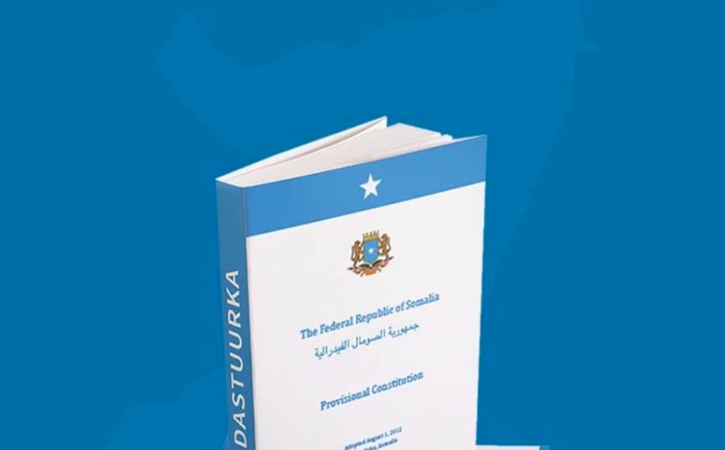

Article 54 stated that the allocation of powers and resources between the FGS and FMSs "shall be negotiated and agreed upon.”[3] That language created an expectation that FMSs would be active participants in how sovereignty is divided. Since 2012, FMSs have organized their institutions, entered cooperative arrangements, and navigated intergovernmental disputes on the assumption that the final federal settlement would require their agreement.
The proposed amendments to Chapter 5 delete Article 54 and replace it with a detailed enumeration of authority across five categories: exclusive federal powers, shared powers, exclusive FMS powers, exclusive local government powers, and residual powers, as elaborated in Schedules 2A through 2D. What had been described as a process of negotiated agreement is replaced by parliamentary allocation`. The amended text does not expressly reconcile this shift: it provides no transitional explanation of how the schedules relate to the negotiation Article 54 envisaged, or why parliamentary determination is now sufficient. For citizens in the FMSs who were told for over a decade that power-sharing would be worked out between their governments and the federal center, the absence of that explanation makes the nature of the change less
clear.
Although Article 54 may have generated expectations about negotiated federal settlement, the threshold legal question is whether Parliament has the constitutional authority to amend it. Article 132 governs amendments proposed after the first term of the Federal Parliament. It sets out procedural requirements and supermajority thresholds. It does not identify Article 54 as unamendable. The only provisions explicitly protected from amendment are the founding principles in Chapter 1. Nor does it require state ratification outside the parliamentary process. It does not require a referendum for every amendment, though Article 132(10) contemplates one where amendments are approved in connection with the Article 136 final-constitution pathway. On a straightforward reading, Parliament’s amendment power under Article 132 is broad, subject only to the Chapter 1 bar and the separate procedure for Article 49 boundary changes. Article 54 therefore falls within its reach. There is no carve-out for Article 54, no requirement of state ratification beyond the bicameral supermajority, and no entrenchment pending bilateral agreement. Read as a whole, the Constitution placed the method of amendment within Parliament’s control even where the subject matter concerns federal allocation.
The Constitution also anticipated structured revision of this kind. Articles 133 and 134 established, for the initial review period, an Oversight Committee and the Independent Constitutional Review and Implementation Commission (ICRIC) charged with completing the constitutional architecture. The ICRIC’s report situates the current amendments within that mandate. Articles 136 and 137 envisioned a trajectory from provisional adoption to a ratified final constitution. The Provisional Constitution was always conceived as an iterative document, and completion of Chapter 5's federal allocation framework falls within that design.
The legal dispute over Parliament's authority is less ambiguous than critics suggest: the text affirmatively supports the amendment. However, FMSs and their publics had been told, and had reason to believe, the federal allocation would be resolved by agreement between the two levels of government. When that expectation is displaced by parliamentary action, however procedurally sound, without explanation, the response is not merely disagreement about outcomes. It is a deeper grievance about process: the sense that the rules of the federal game were changed just as the game was about to be settled. That grievance, while politically understandable, is what has sharpened the surrounding political disputes into something more volatile than routine constitutional revision.
The timing of the amendments intensifies that grievance. The most consequential amendments have been adopted in the closing phase of the current presidential term. Even where the procedural requirements of Article 132 are formally observed, the political calendar inevitably shapes how such amendments are perceived. For a significant segment of political actors and the public, the amendments are not read primarily as technically completing the federal architecture. They are read as political manoeuvring: an attempt by the incumbent administration to reshape the constitutional framework governing executive authority and federal power-sharing at a moment when the question of succession is live. The concern that the amendments serve to entrench federal executive prerogatives before a transition may or may not reflect actual intent. It is a perception that has taken hold widely, and in constitutional politics, such perceptions have real consequences regardless of accuracy. It colors how every element of the process is interpreted: consultation is read as performance, supermajority votes as coerced, and enumerated schedules as the federal center locking in its advantage.
At a contested moment such as this, the Constitution excludes two institutions that, in comparable federal systems, might play a stabilizing role: the judiciary and the FMSs in a formal ratification capacity. On the judiciary, Articles 132 through 136 make no mention of the Constitutional Court. Its powers under Article 109C apply to ordinary laws, not to the document those laws are measured against. Whether that is sound
design or a structural gap is open to debate. The case for exclusion is, however, principled: elected legislatures should carry the authority to rewrite a constitution, and supermajority thresholds provide discipline. By contrast, where amendments touch the distribution of sovereignty between levels of government, judicial review can guard against majoritarian overreach. The ICRIC report confirms the design choice by applying its comparative survey of judicial review exclusively to ordinary legislation, never to the amendment process. The role of the FMSs in the amendment process presents a structural tension. The Constitution does not give state governments a formal ratification role. Article 132 does not require state legislature approval as a condition of validity. It does, however, require structured engagement. Article 132(6) mandates that the Joint Committee, composed of 20 parliamentarians appointed by the Speakers of the two Houses, consult with FMS legislatures and incorporate harmonized submissions where an amendment concerns state interests. FMS legislatures are therefore consulted by the committee, not represented on it. That mechanism institutionalizes participation, but it does not amount to consent, and the committee is not bound by state positions. Article 132(7) requires the Joint Committee to submit its report to each House within two months of appointment. Whether such a report was issued, and whether it reflects genuine engagement with FMS submissions, remains a factual question whose answer bears directly on whether the consultation requirement under Article 132(6) was satisfied in substance and not merely in form. Even if the amendment process can be satisfied without state approval, disputes over the depth and credibility of consultation can raise serious legitimacy questions, particularly in a political environment where Parliament’s independence from executive influence is contested. For states that had long understood federal allocation to be a matter of negotiated settlement, consultation without decisional authority reads as procedural form rather than shared authorship. In that context, formal compliance with Article 132(6) may fail to neutralize suspicion and can reinforce the narrative that the outcome was predetermined.
The principal structural safeguard is found in Article 132(8), which requires a two-thirds majority in both the House of the People and the Upper House for any constitutional amendment to pass. Because members of the Upper House represent the FMSs, this bicameral supermajority functions as the Constitution’s substitute for direct state ratification. That safeguard, however, operates through parliamentary representation rather than intergovernmental negotiation. For states that had long understood federal allocation to be a matter of negotiated settlement, consultation combined with indirect representation does not replicate bilateral agreement.
Taken together, these elements explain why the political disputes surrounding this process have the intensity they do. The turbulence in Parliament is not primarily about the content of the schedules. It is about whether states believe the process was one they were genuinely party to, or one imposed as the political calendar narrowed. The constitutional framework provides no institutional mechanism for resolving that question. It falls entirely to political will.
Supporters of the amendment may argue that codification brings the clarity and predictability a mature federal system requires. Indefinite open-ended negotiation has hampered governance for over a decade; enumerated schedules, however imperfect, give every level of government a defined starting point for its functions and a basis for resolving disputes. That is a serious argument, and the comparative research in the ICRIC report gives it genuine weight. Critics answer that Article 54 was not a transitional placeholder; it was a substantive commitment to a particular mode of federal settlement, one that treated states as co-authors of the constitutional order rather than mere beneficiaries. Replacing it with parliamentary schedules overrides that commitment. Without a clear channel for contestation, the dispute shifts from law to politics—especially amid suspicion of executive intent.
One further dimension compounds the legitimacy problem. The ICRIC report explains the rationale for the changes, but citizens encounter the amendment primarily through the constitutional text itself, which deletes Article 54 and replaces it with Schedules 2A through 2D without explaining the transition from negotiated agreement to parliamentary allocation. In ordinary circumstances, that gap between technical explanation and constitutional text would be a drafting issue. In the present climate, it may reinforce the perception that the change was imposed rather than collectively settled. The constitutional issue is therefore not Parliament’s authority. Article 132 places no special constraint on revising Article 54, and replacing a negotiated model with parliamentary enumeration is textually permissible. The difficulty lies in the transition and procedural legitimacy. An earlier commitment to negotiated allocation has been displaced by a procedurally authorized mechanism that many do not experience as shared authorship. That concern has been sharpened by a series of parliamentary suspensions during the amendment debate, including the barring of lawmakers from sittings without publicly documented committee adjudication of their conduct. The clustering of disciplinary actions amid a compressed amendment timetable creates the appearance of institutional urgency. Whether that urgency was politically reactive or driven by calendar constraints, the effect was to privilege speed over deliberative transparency. In such an environment, procedural regularity can appear secondary to securing outcomes.
What remains is best understood not as a constitutional defect but as a political tension: the displacement of an expectation by a procedure the Constitution authorizes. When such a recalibration occurs in the closing phase of a presidential term, amid live questions of succession and executive authority, even formally valid amendments are interpreted through a political lens. Timing does not invalidate the change, but it magnifies the mistrust surrounding it.
References and Notes:
[1] Bashir M. Sheikh Ali, J.D., Ph.D., is a Somali American lawyer based in Nairobi. The views expressed in this analysis are his own and do not reflect those of any organization with which he may be affiliated. He can be reached at [email protected].
[3] The amended Chapter 5 adopts a hybrid approach to resource allocation, placing certain competences in detailed Schedules while leaving others as shared domains without a defined fiscal mechanism; a full analysis of that framework, however, falls outside the scope of this essay.

- Popular
- Rated
- Commented


04/11/2021 - 11:05:02


28/05/2024 - 15:44:10




18/08/2025 - 17:22:07

01/03/2021 - 09:00:37



Opinions

16/09/2026 - 16:11:57

15/09/2026 - 16:56:43
Politics

22/09/2026 - 07:00:49

15/09/2026 - 20:46:55
Terror Watch

21/09/2026 - 15:38:29

15/09/2026 - 21:02:13

14/09/2026 - 09:39:33
Press Releases

20/09/2026 - 13:43:07

20/09/2026 - 13:41:07





Somalia: Article 54 and the Federal Settlement: Constitutional Authority and the Politics of Completion
A previous essay [2] examined how the proposed amendments to Chapter 5 of the Provisional Constitution reorganize the allocation of powers between the Federal Government (FGS) and the Federal Member States (FMS). The amendments include two provisions